 Save to Pinterest
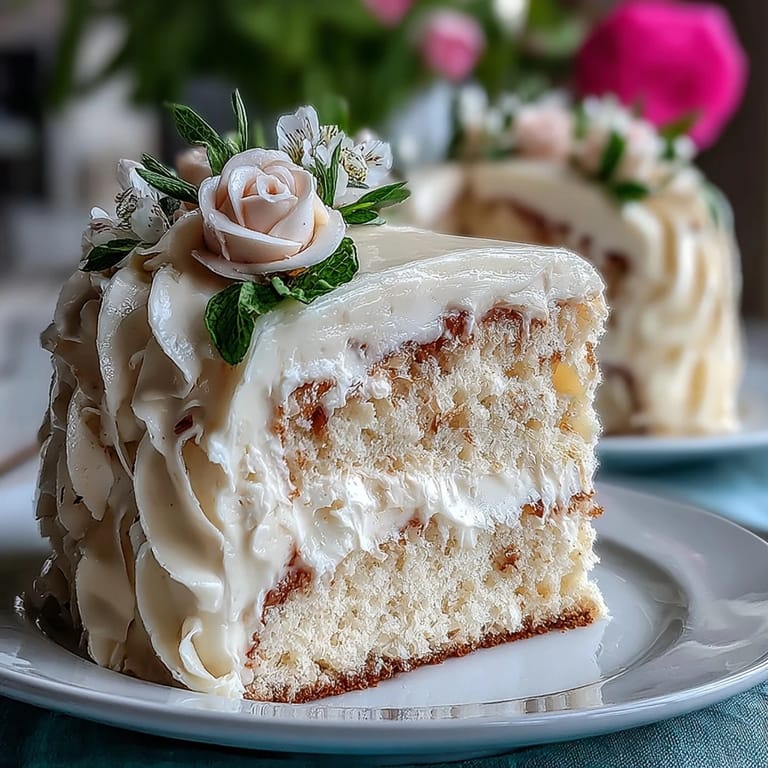
 My cousin's daughter was turning eight, and I wanted to bake something that felt special enough for her First Communion celebration. I stood in the kitchen on a quiet Saturday morning, thinking about how a simple vanilla cake could somehow carry the weight of such a meaningful day. The recipe I'd gathered promised tender crumb and smooth buttercream that would hold delicate flowers, and I realized this cake wasn't just about technique—it was about creating something beautiful enough to mark a moment she'd remember forever.
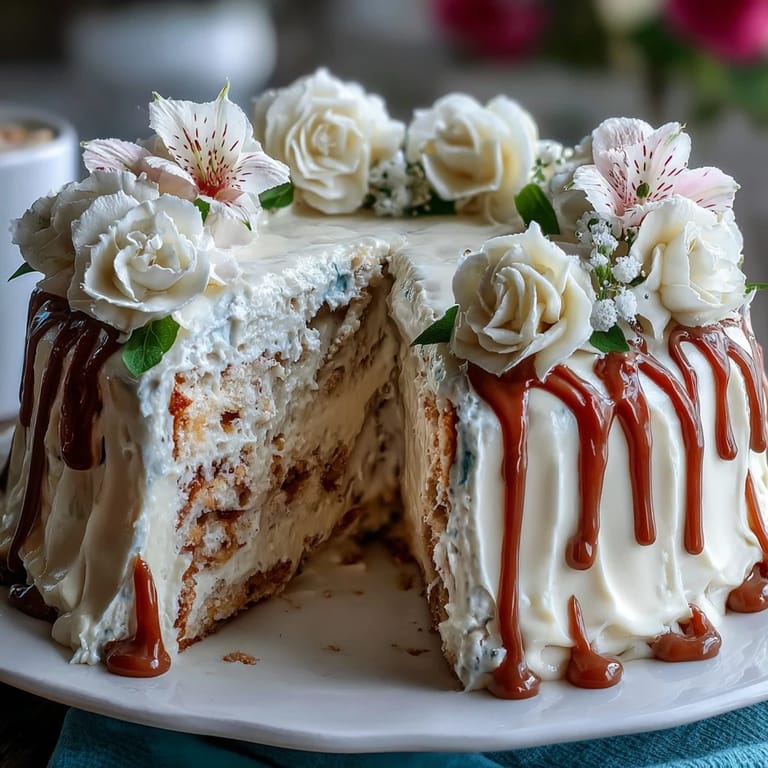
I decorated this cake the night before the celebration, working by lamplight in my quiet kitchen while my family slept. My hands moved slowly with the piping bag, creating little buttercream roses and leaves across the white canvas, and I found myself thinking about how baking for occasions like this grounds you in the present moment. When my cousin arrived the next morning and saw it, her eyes got a little misty—and that's when I understood why this recipe mattered.
Ingredients
- All-purpose flour (2 ½ cups): The foundation of tender crumb; measure by spooning into your cup rather than scooping to avoid packing it down.
- Baking powder (2 ½ tsp): Double-check the date on your tin since old baking powder won't give you that gentle rise.
- Salt (½ tsp): A small amount that brightens vanilla without making the cake taste salty.
- Unsalted butter (1 cup for cake, 1 ½ cups for frosting): Room temperature butter creams properly and incorporates air; cold butter makes lumpy frosting.
- Granulated sugar (2 cups): Creates structure and helps the eggs incorporate for a fine, even crumb.
- Eggs (4 large): Room temperature eggs mix in smoothly; cold ones can curdle your batter.
- Pure vanilla extract (1 tbsp plus 2 tsp): Pure extract tastes cleaner than imitation; don't skip the quality here.
- Whole milk (1 cup plus ¼ cup): Room temperature milk helps the batter stay emulsified and creates tender texture.
- Powdered sugar (6 cups, sifted): Sifting removes lumps before mixing so your buttercream stays smooth and silky.
- Food coloring (pink, yellow, green, or as desired): Gel coloring beats liquid for vibrant hues without thinning your buttercream.
Tired of Takeout? 🥡
Get 10 meals you can make faster than delivery arrives. Seriously.
One email. No spam. Unsubscribe anytime.
Instructions
- Prepare your workspace:
- Preheat your oven to 350°F while you grease a 9x13-inch pan with butter or cooking spray and line the bottom with parchment paper, which lets you lift the cooled cake out without it sticking.
- Mix your dry ingredients:
- In a medium bowl, whisk together flour, baking powder, and salt until evenly distributed; this distributes the leavening so you don't end up with dense pockets.
- Cream butter and sugar:
- Beat softened butter with sugar for about 3 minutes until it looks pale, fluffy, and almost frosting-like; this process traps air bubbles that create a tender cake.
- Incorporate eggs and vanilla:
- Add eggs one at a time, mixing well after each addition so they emulsify properly into the butter mixture, then mix in vanilla extract until combined.
- Build the batter gently:
- Add your dry ingredients in three additions, alternating with milk and starting and ending with flour; this gentle approach keeps the cake tender since overmixing develops gluten and creates toughness.
- Bake until golden:
- Pour batter into your prepared pan and smooth the top with a spatula, then bake for 28–32 minutes until a toothpick inserted in the center comes out clean. The cake should smell buttery and feel set but still have a slight jiggle in the center when you gently shake the pan.
- Cool with patience:
- Let the cake rest in the pan for 10 minutes before turning it out onto a wire rack to cool completely; this prevents it from breaking apart while still warm and fragile.
- Make your buttercream:
- Beat softened butter until creamy, then gradually add sifted powdered sugar a cup at a time, alternating with splashes of milk, beating until smooth and fluffy. Mix in vanilla at the end.
- Tint your colors:
- Divide buttercream into small bowls and add gel food coloring a tiny bit at a time, stirring until you reach the shade you want; gel coloring stays vivid without loosening the frosting.
- Frost and decorate:
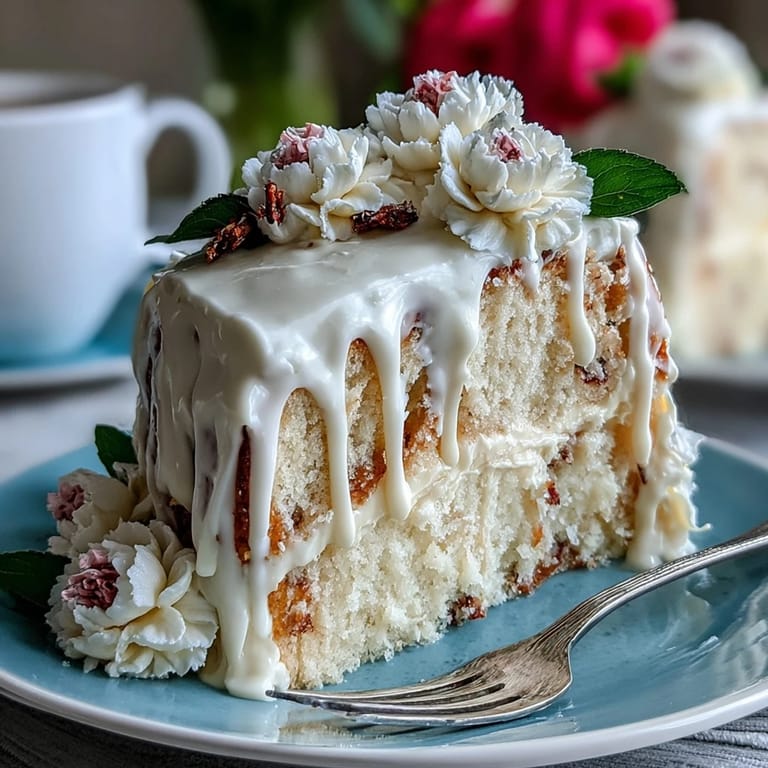
- Spread a generous layer of plain buttercream over the cooled cake as your base, then fill piping bags with colored buttercream fitted with flower and leaf tips. Pipe delicate flowers and leaves across the cake, working from one corner to another in a flowing pattern that feels natural rather than rigid.
- Add a finishing touch:
- If desired, pipe a small cross or personalized text with a round tip for a First Communion message; this small detail transforms the cake from pretty to purposeful.
 Save to Pinterest
 Watching the little girl's face light up when she saw her cake was a reminder that some recipes carry more than flavor—they carry meaning. A vanilla sheet cake with piped flowers might seem simple, but when you bake it with intention for someone you love, it becomes a small work of art.
Why This Cake Works for Celebrations
Sheet cakes have a humble elegance that feels perfect for milestone moments—they're not fancy or fussy, but they're also not plain. The size feeds a crowd without making you feel like you're running a bakery from your home, and the gentle vanilla flavor appeals to everyone from picky eaters to adults who appreciate restraint. I've learned that the best celebration cakes are ones that let you focus on the decoration rather than wrestling with finicky techniques.
Decorating with Confidence
The first time I piped buttercream flowers, I was convinced they'd look terrible, but something shifted when I stopped thinking of them as perfect and started thinking of them as handmade. Each flower doesn't need to match the others—in fact, slight variations make the cake look more charming and personal. Practice on a piece of parchment paper first if you're nervous, then move to the cake knowing that any wobbly petal just adds character.
Make-Ahead Magic and Storage Tips
One of my favorite discoveries was that this cake actually improves after a day, as the flavors mellow and marry together into something more complex than fresh cake. You can bake the layers a full day ahead and store them wrapped at room temperature, then frost and decorate the morning of your event. This flexibility means you're not stressed the day of celebrating.
- Store the frosted cake covered at room temperature for up to three days; buttercream actually prefers not to be refrigerated unless your kitchen is very hot.
- If you need to transport the cake, place it on a sturdy board and drive slowly—vibrations are the enemy of delicate piped flowers.
- Leftover buttercream keeps for two weeks in an airtight container and can be re-whipped if it gets too soft.
 Save to Pinterest
 Baking this cake taught me that celebration cakes don't need to be complicated to be meaningful—they just need to be made with care. Whatever occasion brings you to this recipe, know that you're creating something that will nourish both body and memory.
Frequently Asked Recipe Questions
- → What makes this sheet cake moist?
The combination of butter, eggs, milk, and careful mixing helps achieve a tender and moist crumb throughout the cake.
- → How is the buttercream colored for decoration?
Gel food coloring is added to portions of buttercream to create vibrant, non-runny hues ideal for piping flowers and leaves.
- → Can this cake be prepared in advance?
Yes, it can be made a day ahead and stored covered at room temperature to maintain freshness.
- → What piping tips are used for the floral decorations?
Assorted decorating tips including flower, leaf, and round tips are used to create delicate buttercream decorations.
- → Is it possible to add extra flavor to the cake batter?
A half teaspoon of almond extract may be added for additional flavor without overwhelming the vanilla base.