 Save to Pinterest
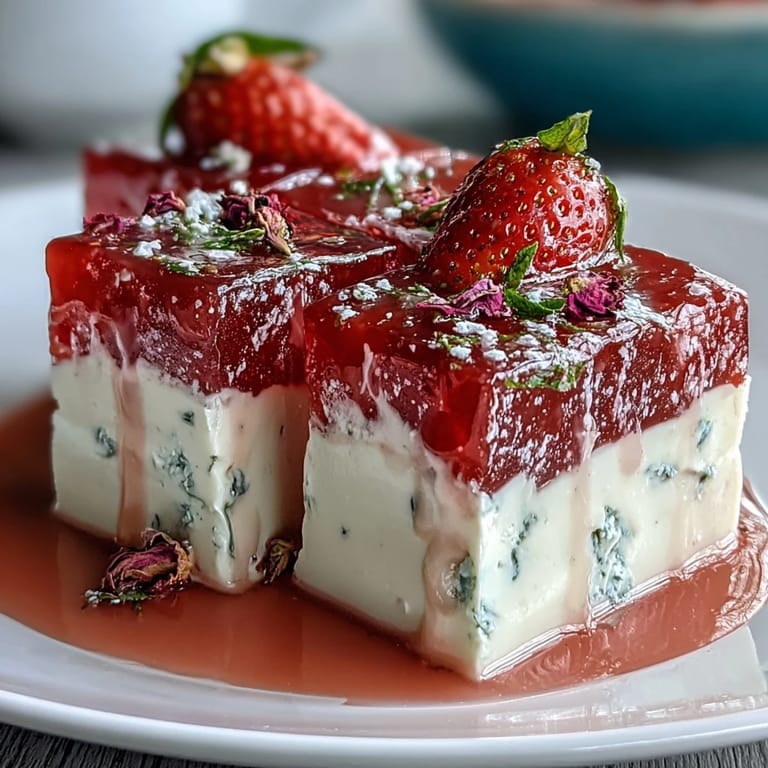
 There was something captivating about the scent of rose water mingling with ripe strawberries in my kitchen one breezy June afternoon. As I sliced bright cubes of gelatin for the first time, the sunlight caught their jewel tones and I realized this was no ordinary dessert. The playful mosaic effect made me smile, a little like crafting edible stained glass. Noise from an open window—a neighbor laughing, a dog barking—occasionally punctuated my concentration but never broke the spell. Strawberry rose gelatin mosaic cake quickly became my go-to anytime I craved something both stunning and summery.
One evening, I brought this cake to a friend’s rooftop gathering, still chilly from the fridge, and everyone gathered around as I unmolded it. The anticipation grew with every gentle tap before it finally slipped onto the plate, glossy and shimmering, earning a spontaneous round of applause.
Ingredients
- Strawberry-flavored gelatin: The classic base for color and tart-sweet flavor—be sure to let it set fully before cutting.
- Unflavored gelatin: This is the structural backbone for the rose and cream layers; always let it bloom before mixing.
- Rose water: Floral and aromatic, a tiny splash goes a long way—start small and taste as you go.
- Granulated sugar: Sweetens the rose layer; dissolving it fully helps avoid grit.
- Pink food coloring: Just a drop makes the rose gelatin cheerfully pink, but you can skip if you prefer subtler tones.
- Whole milk and heavy cream: They create a rich and silky cream base that suspends the gelatin cubes beautifully; gently heating prevents scorching.
- Sweetened condensed milk: Adds sweetness and a luxurious mouthfeel—scrape the can for every bit.
- Vanilla extract: Rounds out the floral and berry notes—pure vanilla makes a noticeable difference.
Tired of Takeout? 🥡
Get 10 meals you can make faster than delivery arrives. Seriously.
One email. No spam. Unsubscribe anytime.
Instructions
- Gelatin mix-ins:
- Dissolve the strawberry gelatin in boiling water, whisking until clear—watch for the steam and listen for the little cracks as you pour it into a shallow dish.
- Layer of roses:
- Combine water and sugar in a saucepan, heat, and let the scent of candied roses fill the kitchen; bloom the gelatin and blend with rose water and a hint of pink if desired before chilling.
- Cube it up:
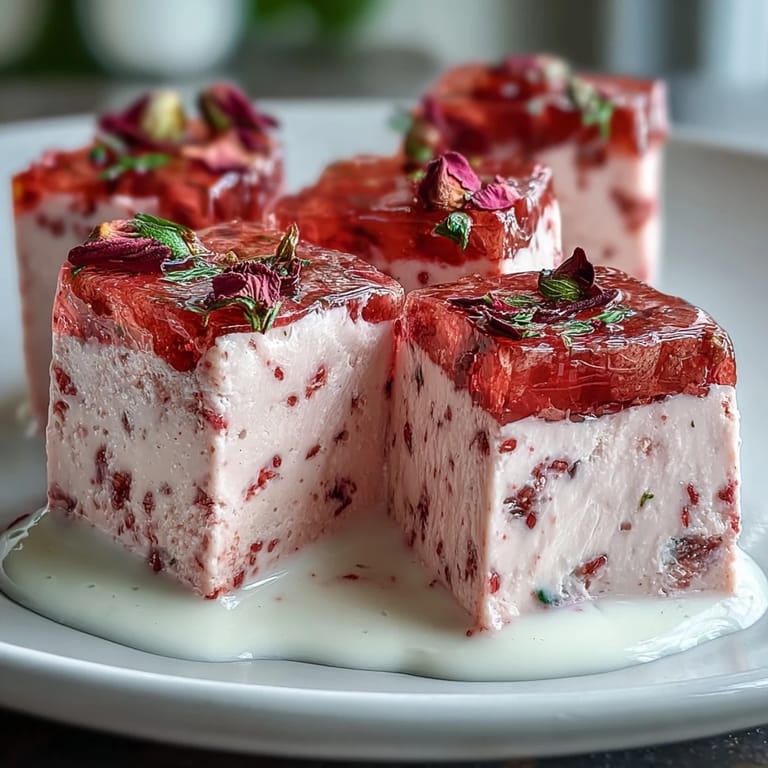
- Once both gelatins are set, gently cut them into gleaming cubes—each slice should wiggle slightly but keep its shape.
- Creamy embrace:
- Sprinkle gelatin over cold water in a bowl to bloom while milk and cream heat nearby; once blended, add sweetened condensed milk and vanilla, stirring gently, then let cool until barely warm but still pourable.
- Mosaic assembly:
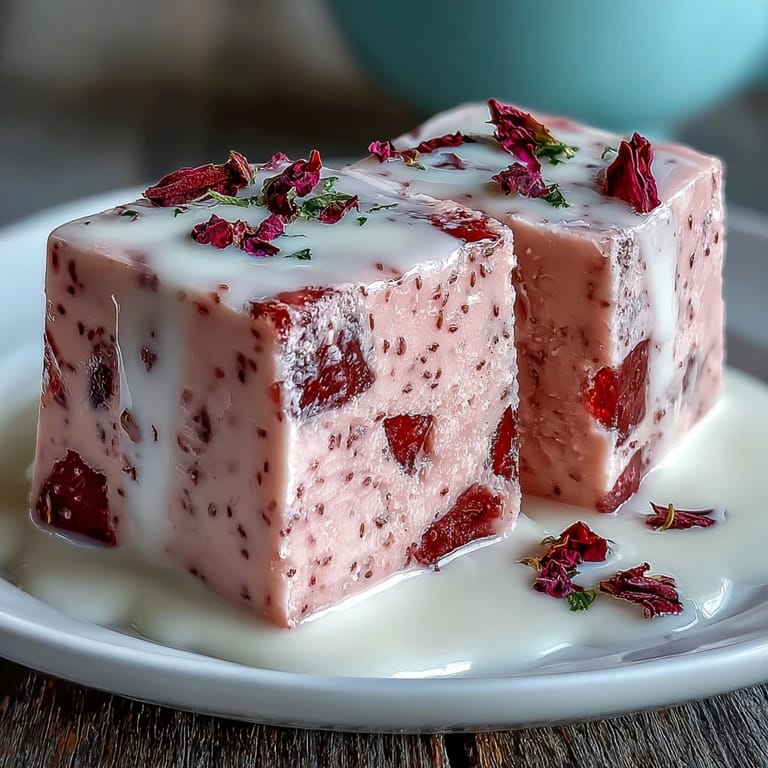
- Mound the colorful cubes into your mold, scatter them for a patchwork effect, and tap the dish to settle stubborn gaps.
- Cascade the cream:
- Carefully pour the cooled cream over the cubes, pause to pop any air bubbles with a spoon, and admire the marbled surface.
- Chill and set:
- Refrigerate for 3-4 hours; the cake should feel springy yet firm when pressed gently with a fingertip.
- Unmold and dazzle:
- To unmold, dip the base in warm water for five seconds, hurriedly flip onto a plate, and peek as the mosaic releases its shape; serve cold for maximum refreshment.
 Save to Pinterest
 On a lazy Sunday, my niece helped scatter the gelatin cubes into the mold, giggling whenever her hands got sticky. By the time we sliced the cake, the look of delight on her face made me realize this mosaic was truly a centerpiece for sweet, shared moments.
Making It Extra Special
Once, I infused the milk for the cream base with a strip of orange zest, letting the burst of citrus gently perfume the cake—it made the whole experience brighter and unexpected.
Decorating and Serving Tips
I love piling the unmolded cake high with ruby-red strawberries and scattering over a few fragrant rose petals—it feels like a secret garden party after just a few minutes of extra effort.
What to Watch For When Chilling
Patience is everything here, and a bit of fridge space is worth the investment for those crisp mosaic edges. Don’t try to speed up setting in the freezer or the texture will suffer.
- Check the firmness with a fingertip before unmolding.
- Loosen the sides with a thin knife if needed.
- Be ready to serve right after unmolding for the best chill.
 Save to Pinterest
 Every slice of this cake is a cheerful surprise, and sharing it never fails to spark curiosity and delight. Enjoy those mosaic moments—they make everyday gatherings feel like celebrations.
Frequently Asked Recipe Questions
- → How do I ensure gelatin sets properly?
Bloom gelatin in cold water first, then dissolve it fully in hot milk or water. Avoid boiling the gelatin; heat only until it dissolves to preserve its setting power and texture.
- → Can I swap gelatin for a vegetarian alternative?
Agar-agar can be used but behaves differently: it sets firmer and sets at higher temperatures. Test proportions and set times in a small batch, and adjust heating and chilling accordingly.
- → What size should the gelatin cubes be?
Cut cubes about 1-2 cm (roughly 1/2 inch) so they sit evenly in the mold and create a mosaic effect without sinking or creating large gaps when the cream base is poured.
- → How do I prevent air bubbles when pouring the cream?
Let the cream mixture cool until just lukewarm and pour slowly over the gelatin cubes. Tap the mold gently on the counter to release trapped air before chilling.
- → Any tips for unmolding cleanly?
Dip the outside of the mold briefly in warm water for a few seconds, then invert onto a plate. Avoid soaking the mold to prevent melting the edges; a quick warm rinse is enough.
- → How should leftovers be stored and how long do they keep?
Cover and refrigerate slices for up to 3 days. Keep chilled to maintain texture, and allow a few minutes at room temperature before serving if the gel is very firm.