 Save to Pinterest
 My sister texted me a photo of Cadbury Mini Eggs on the store shelf in March, and suddenly I was standing in the kitchen thinking, why not bake these into cookies? What started as a silly idea turned into something I couldn't stop making—soft, buttery cookies studded with chocolate chips and those colorful, crunchy shells that crack between your teeth. The first batch came out of the oven when my nephew walked in, and he grabbed a warm cookie before I could even set them down. That moment pretty much sealed it.
Last Easter, I brought these to my in-laws' house and watched my mother-in-law's face light up when she bit into one—she kept coming back for more, rotating between these and the traditional ham. By the end of the day, the plate was empty and someone was asking for the recipe. That's when you know a recipe has staying power.
Ingredients
- All-purpose flour (2 1/4 cups): This is your structure, so measure it by spooning and leveling, not scooping straight from the bag, which always packs it in too tight.
- Baking soda (1/2 teaspoon): This is non-negotiable for spread and lift; without it, you'll get dense pucks instead of soft, chewy cookies.
- Salt (1/2 teaspoon): Even in sweet things, salt is the secret ingredient that makes everything taste more like itself.
- Unsalted butter (1 cup, softened): Cold butter won't cream properly with sugar, so leave it on the counter for thirty minutes; you should be able to press your finger into it easily.
- Light brown sugar (3/4 cup) and granulated sugar (1/2 cup): The mix of both creates depth and chewiness; brown sugar adds moisture and molasses notes.
- Eggs (2 large): Room temperature eggs mix in smoothly and create a tender crumb; cold ones can break the emulsion and make the dough greasy.
- Vanilla extract (2 teaspoons): Pure vanilla is worth every penny because imitation always tastes a little flat in cookies.
- Semi-sweet chocolate chips (1 cup): Don't use melting chocolate or cheap chips; real chocolate chips hold their shape and taste better.
- Cadbury Mini Eggs (1 1/2 cups, roughly chopped): Roughly chop them so you get chunks of chocolate and candy shell throughout, not powdered Easter sadness.
Tired of Takeout? 🥡
Get 10 meals you can make faster than delivery arrives. Seriously.
One email. No spam. Unsubscribe anytime.
Instructions
- Prep your oven and pans:
- Preheat to 350°F and line your baking sheets with parchment paper so they slide off easily without sticking. This step takes two minutes but saves you heartbreak later.
- Combine the dry stuff:
- Whisk flour, baking soda, and salt together in a medium bowl, making sure the baking soda is evenly distributed. Setting it aside keeps you organized and prevents lumps in your final dough.
- Cream butter and sugars:
- Beat the softened butter with brown and granulated sugar until the mixture looks pale, fluffy, and almost mousse-like—this takes about three minutes with an electric mixer. This step incorporates air into the dough, which is what makes cookies light instead of dense.
- Add eggs and vanilla:
- Drop in one egg, beat until combined, then add the second egg the same way, scraping down the bowl between additions. Pour in vanilla and mix until the dough looks smooth and slightly glossy.
- Bring the dough together:
- Add the dry mixture to the wet mixture in two additions, stirring gently until just combined—don't overmix, or your cookies will be tough. You're looking for a dough that's uniform but still soft and slightly shiny.
- Fold in the good stuff:
- Use a spatula to gently fold in the chocolate chips and chopped Mini Eggs, being careful not to crush the candy shells too much. This is where your cookies go from good to memorable.
- Scoop and space:
- Use a tablespoon to drop dough balls onto your prepared baking sheets, leaving about two inches between each cookie so they have room to spread. If you want to get fancy, press a few whole Mini Egg pieces on top of each ball for a pretty presentation.
- Bake to golden edges:
- Bake for ten to twelve minutes, watching for golden edges while the centers still look slightly underdone—they'll continue cooking as they cool. This is the difference between crispy-edged and chewy-centered cookies versus cookies that taste like they came from a box.
- Cool with patience:
- Let them sit on the baking sheet for five minutes so they firm up enough to move without falling apart, then transfer to a wire rack. This cooling time is crucial because it stops residual heat from making them dry.
 Save to Pinterest
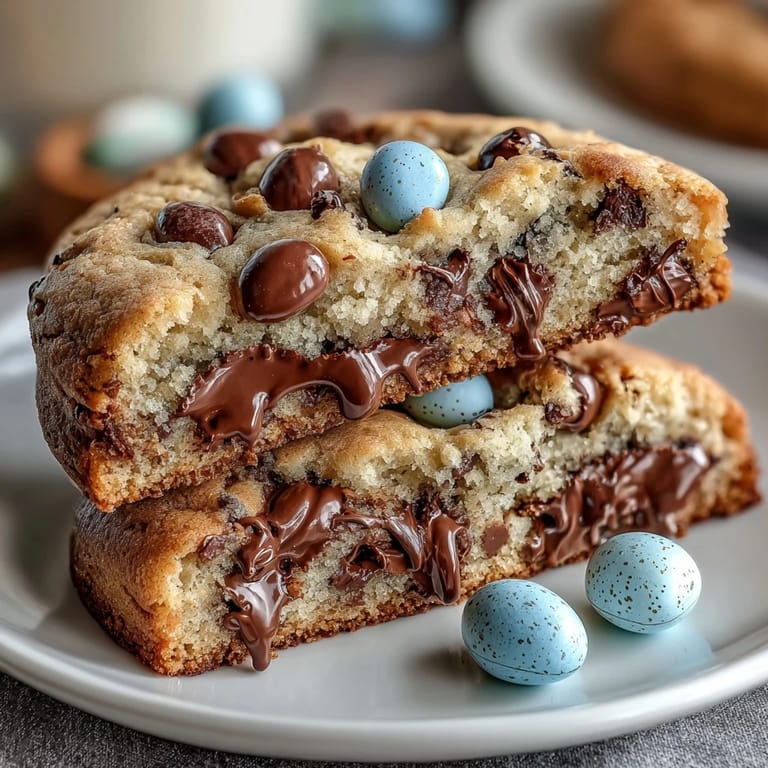
 The real magic happened when my friend's five-year-old daughter discovered that you could see the mini eggs through the cookie—she called them 'surprise cookies' and made me promise to make them for her birthday party. Suddenly these weren't just Easter treats anymore; they became the thing she looked forward to, which is exactly how a recipe should make you feel.
Why Cadbury Mini Eggs Change Everything
Most cookie recipes are interchangeable—you could swap nuts for dried fruit and move on with your life. But Cadbury Mini Eggs are different because they bring both chocolate and texture, plus that nostalgic spring feeling that makes people emotional in the best way. They're also sturdy enough to stay intact through mixing and baking, unlike some candies that would melt or crumble into nothing.
Chocolate Chip Variations That Work
Semi-sweet is the safe choice because it doesn't overpower the Mini Eggs, but I've experimented enough to know that dark chocolate creates a more sophisticated cookie, while milk chocolate makes it sweeter and more nostalgic. The chocolate chips are there as a supporting character, so don't let them steal the show by choosing something too bold. If you're feeling adventurous, a mix of semi-sweet and dark creates beautiful complexity.
Storage and Make-Ahead Magic
These cookies stay soft for three days in an airtight container at room temperature, which is longer than you'd expect because of the moisture in the Mini Eggs. You can also freeze the unbaked dough balls for up to three months—just add a minute or two to the baking time when cooking from frozen, and you'll have fresh warm cookies anytime you want them. There's something wonderful about pulling a sheet of cookie dough from the freezer on a random Tuesday afternoon and having homemade cookies by dinner.
- Always freeze dough balls on a baking sheet first, then transfer to a freezer bag so they don't stick together into one giant dough block.
- Keep baked cookies in the coldest part of your pantry away from sunlight, because heat and light make the chocolate and candy shell go weird.
- These are forgivable cookies—even slightly stale ones are still delicious, especially dunked in milk or coffee.
 Save to Pinterest
 These cookies are proof that sometimes the simplest idea—taking something you love and baking it into something else you love—creates actual joy. Make them once, and you'll understand why people keep asking you to make them again.
Frequently Asked Recipe Questions
- → What makes these cookies soft and chewy?
The combination of brown and granulated sugars along with unsalted butter creates a moist and tender texture, while careful baking keeps the centers soft.
- → Can I substitute the Cadbury Mini Eggs?
Yes, you can replace Mini Eggs with other small candy-coated chocolates or extra chocolate chips for similar texture and flavor.
- → How should I store these cookies for freshness?
Store in an airtight container at room temperature to maintain softness. They can also be frozen for up to three months.
- → Is it necessary to chop the Mini Eggs before mixing?
Chopping helps distribute the candy pieces evenly and prevents large chunks, enhancing each bite's texture.
- → Can different types of chocolate chips be used?
Absolutely, milk or dark chocolate chips can be swapped in depending on your preference without affecting the cookie's overall texture.