 Save to Pinterest
 My neighbor knocked on the door one Sunday holding a bag of lemons from her tree, and I knew exactly what to do with them. I'd been avoiding lemon meringue pie for years, convinced it was too fussy, too prone to weeping or shrinking. But those lemons smelled like sunshine, and something about that afternoon made me brave. I pulled out my grandmother's pie dish and decided to stop overthinking it.
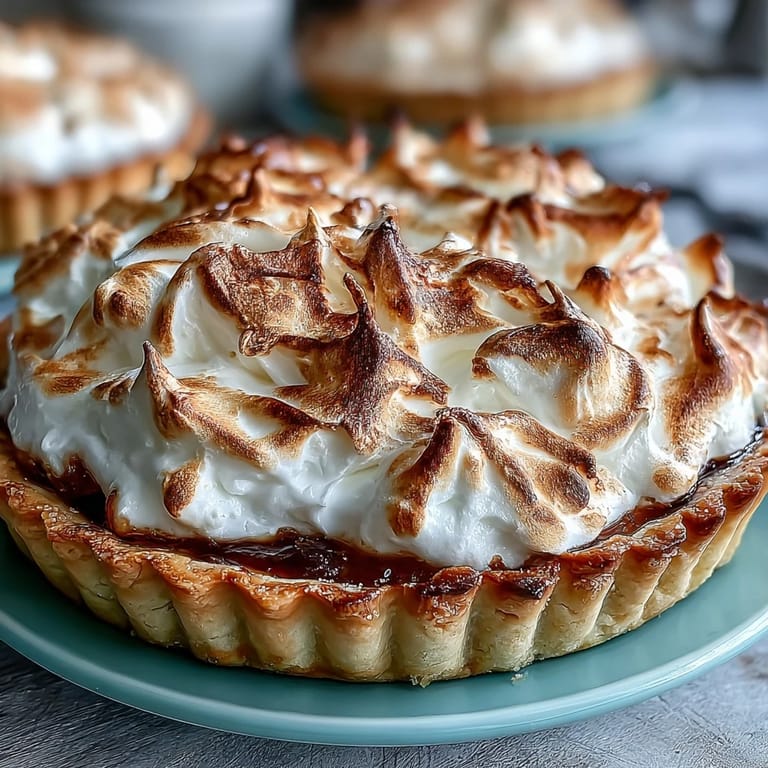
I made this pie for a potluck once, and someone asked if I bought it from a bakery. I laughed so hard I nearly dropped my fork. The meringue had puffed up into these beautiful golden peaks, and the filling set perfectly after I finally learned to let it chill completely. That compliment made every whisked egg white worth it.
Ingredients
- All-purpose flour (1 1/4 cups): The foundation of a tender, flaky crust that holds up under all that filling without getting soggy.
- Cold unsalted butter (1/2 cup, cubed): Keep it cold, work it fast, and you'll get those buttery layers that shatter when you cut into them.
- Ice water (3 to 4 tablespoons): Add just enough to bring the dough together without making it sticky or tough.
- Granulated sugar (1 cup for filling, 1/2 cup for meringue): Sweetens the filling and stabilizes the meringue so it holds its shape beautifully.
- Cornstarch (1/4 cup): This is what thickens the lemon filling into that smooth, sliceable texture instead of a runny mess.
- Egg yolks (4 large): They make the filling rich and velvety, so save those whites for the meringue.
- Lemon zest (2 teaspoons): Grate it fine and fresh for a burst of citrus oil that brightens every bite.
- Freshly squeezed lemon juice (1/2 cup): Bottled juice will never taste the same, use real lemons and you'll notice the difference instantly.
- Egg whites (4 large, room temperature): Cold whites won't whip properly, let them sit out while you make the filling.
- Cream of tartar (1/4 teaspoon): It stabilizes the meringue and helps it hold those stiff, glossy peaks without deflating.
Tired of Takeout? 🥡
Get 10 meals you can make faster than delivery arrives. Seriously.
One email. No spam. Unsubscribe anytime.
Instructions
- Mix and chill the dough:
- Whisk the flour, salt, and sugar together, then cut in the cold butter until it looks like coarse sand with a few pea-sized pieces. Add ice water one tablespoon at a time, mixing gently until the dough just holds together, then shape it into a disk, wrap it, and chill for at least an hour.
- Roll and blind bake the crust:
- Roll the chilled dough on a floured surface until it's big enough to fit your pie dish, press it in, trim the edges, and prick the bottom with a fork. Line it with parchment, fill with pie weights, and bake at 400°F for 15 minutes, then remove the weights and bake another 8 to 10 minutes until golden and crisp.
- Cook the lemon filling:
- Whisk sugar, cornstarch, and salt in a saucepan, then slowly add water until smooth and cook over medium heat, stirring constantly until it thickens and bubbles. Temper the egg yolks by whisking in a bit of the hot mixture, then whisk the yolks back into the pan and cook for 2 more minutes before stirring in the lemon zest, juice, and butter.
- Whip the meringue:
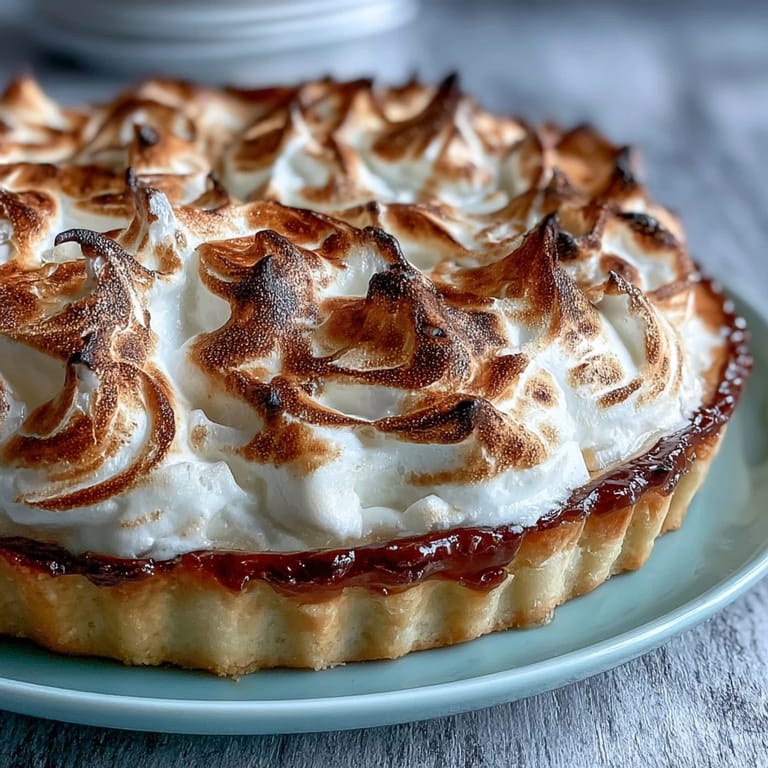
- Beat the egg whites and cream of tartar on high speed until soft peaks form, then gradually add the sugar and keep beating until the peaks are stiff and glossy. Fold in the vanilla and spread the meringue over the warm filling, making sure to seal it all the way to the crust edges.
- Bake and chill:
- Bake at 350°F for 15 to 18 minutes until the meringue turns golden brown on top. Let the pie cool to room temperature, then chill it for at least 2 hours so the filling sets completely before you slice into it.
 Save to Pinterest
 The first time I served this pie, my brother took a bite and went quiet for a second. Then he said it tasted exactly like the one our grandmother used to make for Easter. I hadn't even been trying to replicate hers, but somehow the bright lemon and billowy meringue brought it all back. Food has a way of doing that.
Getting the Crust Just Right
I used to skip blind baking and wonder why my crust turned out soggy every time. Now I know that parchment and pie weights are non-negotiable if you want a crisp bottom that can handle all that lemon filling. Brushing the baked crust with a little beaten egg white before adding the filling creates an extra barrier against moisture. It's a small step that makes a big difference, especially if you're making the pie a day ahead.
Mastering the Meringue
Room temperature egg whites whip up faster and fluffier than cold ones, so I always let them sit out while I make the filling. I learned the hard way that adding sugar too quickly can deflate the whites, so now I add it gradually once soft peaks form. The meringue should look thick and glossy, almost like marshmallow fluff, before you spread it over the pie. If it looks thin or runny, keep beating.
Serving and Storing
This pie is best served chilled, straight from the fridge, with a sharp knife dipped in hot water between slices for clean cuts. Leftovers keep in the fridge for up to three days, though the meringue may start to weep a little after the first day. I like to serve it with a cup of black coffee or a glass of something sweet and sparkling.
- Use a serrated knife for the cleanest cuts through the meringue.
- If you have extra lemon zest, sprinkle a tiny bit on top of the meringue before baking for a pop of color.
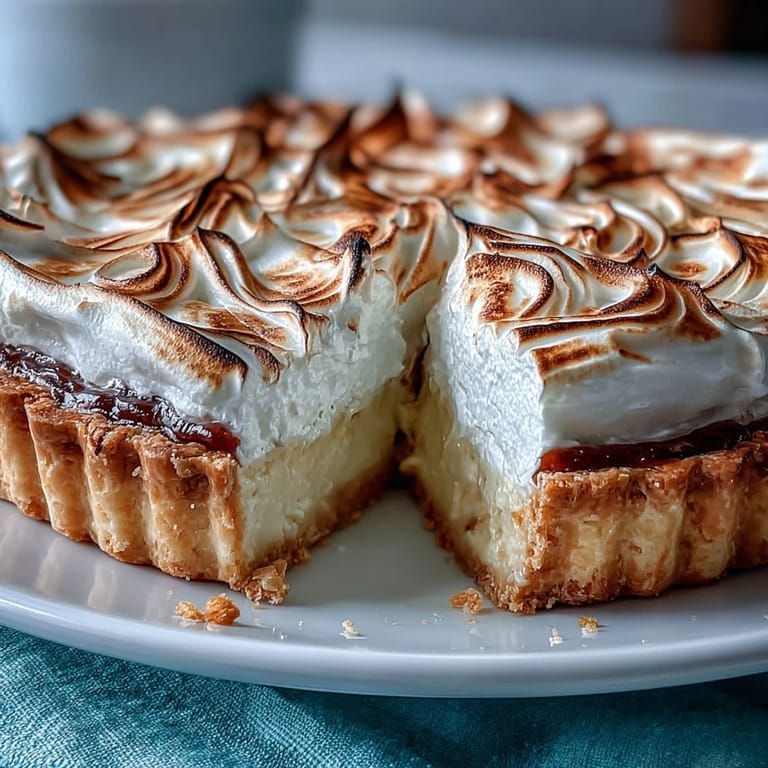
- Don't skip the chilling time, it's the only way the filling will slice neatly.
 Save to Pinterest
 There's something deeply satisfying about pulling a golden-topped lemon meringue pie out of the oven and knowing you made it from scratch. It's the kind of dessert that turns an ordinary dinner into something people remember.
Frequently Asked Recipe Questions
- → How do I prevent the meringue from weeping?
Spread the meringue over the filling while it's still warm, ensuring you seal it completely to the crust edges. This prevents moisture from forming between layers. Also, avoid making meringue on humid days.
- → Can I make the crust ahead of time?
Yes, you can prepare and blind-bake the crust up to 2 days in advance. Store it covered at room temperature until ready to fill.
- → What's the best way to get clean slices?
Chill the pie for at least 2 hours before slicing. Use a sharp knife dipped in hot water and wiped clean between each cut for the neatest presentation.
- → Can I use bottled lemon juice instead of fresh?
Fresh lemon juice is highly recommended for the best flavor and brightness. Bottled juice often tastes flat and may contain preservatives that affect the filling's texture.
- → How long does lemon meringue pie keep?
Store covered in the refrigerator for up to 2 days. The meringue is best within the first 24 hours, as it may begin to soften or weep after extended storage.
- → Why did my meringue shrink away from the crust?
This happens when the meringue isn't sealed properly to the crust edges. Always spread it all the way to the rim, ensuring no gaps, before baking.