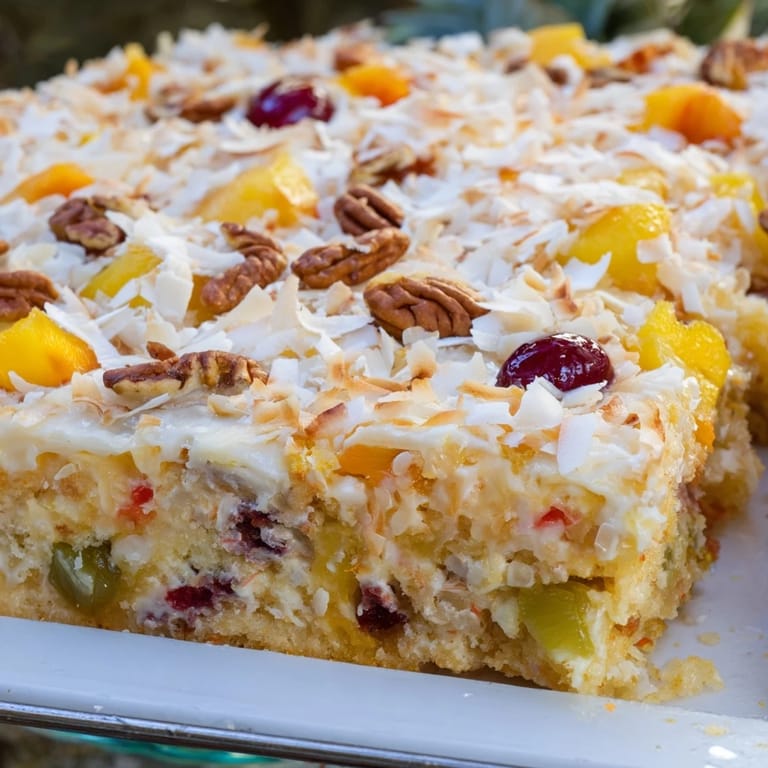
 Save to Pinterest
 My neighbor brought this cake to a potluck on a sweltering July afternoon, and I watched people go back for thirds. When she finally shared the recipe, I was surprised by how simple it was—just a can of fruit cocktail doing all the heavy lifting while I stood there wondering why I hadn't thought of it sooner. The first time I made it, the kitchen filled with this warm, jammy sweetness that reminded me baking doesn't always require complexity. That coconut frosting poured hot over the warm cake created this tender, soaked-through texture that felt almost indulgent for something so effortless.
I made this for my daughter's school bake sale, and a parent I barely knew came back to ask for the recipe before the cake was even half gone. She described it as tasting like someone's grandmother knew exactly what she was doing, which made me laugh because the truth is far simpler—canned fruit and coconut do most of the thinking. That moment stuck with me because it reminded me that food doesn't have to be complicated to feel special.
Ingredients
- All-purpose flour: Two cups gives you structure without making the crumb dense or heavy; it's the quiet backbone holding all that fruit together.
- Granulated sugar: One and a half cups sweetens the cake itself while working with the fruit's natural juice to create that tender crumb.
- Large eggs: Two eggs bind everything and add just enough richness to make bites feel substantial.
- Canned fruit cocktail in juice, undrained: Don't drain it—that's where the magic lives; the syrup and juice are what make this cake stay moist for days.
- Baking soda: One teaspoon reacts with the fruit's acidity to help the cake rise gently and evenly.
- Salt: Half a teaspoon brightens all the sweetness and keeps the flavors from feeling one-dimensional.
- Vanilla extract: One teaspoon adds a whisper of depth that ties everything together.
- Granulated sugar (for frosting): One cup combines with milk and butter to create the caramelized base of your frosting.
- Whole milk: Half a cup thins the frosting to a pourable consistency; it's also what keeps the coconut from clumping.
- Unsalted butter: Half a cup melts into the warm frosting and prevents it from tasting greasy or one-note sweet.
- Sweetened shredded coconut: One cup is the star of the frosting—toasted slightly as it cooks with the sugar and milk.
- Chopped pecans or walnuts (optional): Half a cup adds a small crunch and keeps the frosting from being pure sweetness.
- Vanilla extract (for frosting): One teaspoon anchors the coconut flavor so it doesn't taste artificial.
Tired of Takeout? 🥡
Get 10 meals you can make faster than delivery arrives. Seriously.
One email. No spam. Unsubscribe anytime.
Instructions
- Prep your pan and heat the oven:
- Set your oven to 350°F and give that 9x13-inch pan a light coating of grease or cooking spray. A cold oven plus a cold pan means your batter won't start cooking before you're ready.
- Build your dry mixture:
- Whisk flour, sugar, baking soda, and salt together in a large bowl—just enough to break up any clumps and get everything evenly distributed. This prevents you from streaky baking soda taste or flour pockets.
- Combine wet ingredients with dry:
- Crack the eggs directly into the dry mixture, then pour in that entire can of fruit cocktail—syrup and all—and add vanilla. Stir gently until just barely combined; the moment you stop seeing dry flour is the moment you stop stirring, because overmixing makes tough, dense cake.
- Transfer and spread:
- Pour the batter into your greased pan and use a spatula to spread it into an even layer. An even layer means even baking with no raw spots or overdone edges.
- Bake until just done:
- Slide it into the oven for 30 to 35 minutes—you're looking for a toothpick or knife inserted near the center to come out with just a few moist crumbs clinging to it, not wet batter. The top should feel springy when you gently press it.
- Make the frosting while cake bakes:
- In a medium saucepan, combine sugar, milk, and butter over medium heat, stirring often as it comes to a gentle boil. You'll see the mixture bubble gently and smell butter and caramelizing sugar—that's exactly right.
- Finish the frosting:
- Remove from heat and stir in coconut, nuts if you're using them, and vanilla extract until it's evenly mixed. Let it cool for just one or two minutes so it's still pourable but not screaming hot.
- The frosting transfer:
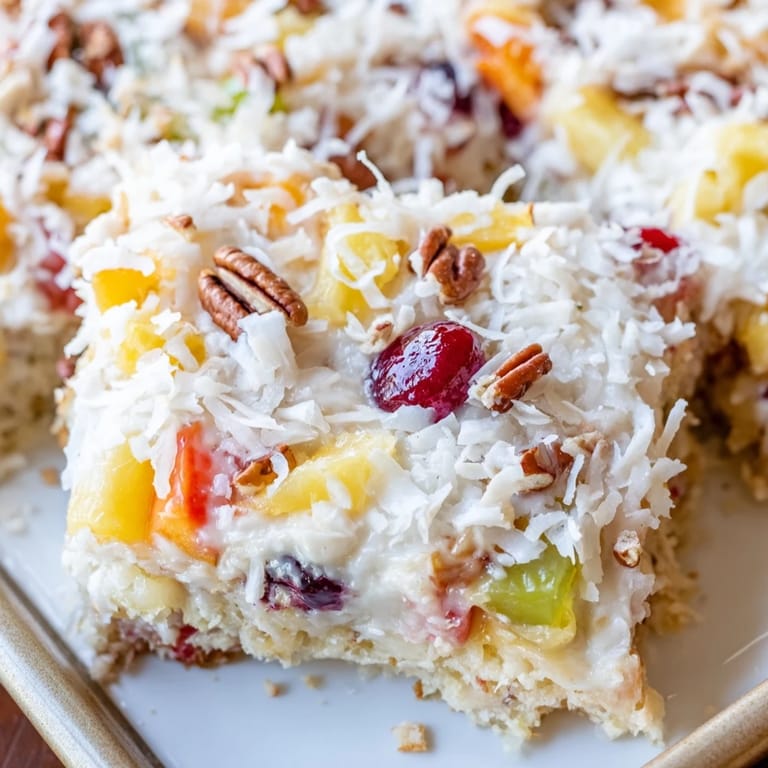
- Pull the cake straight from the oven and use a fork or wooden skewer to poke holes all over the surface—dense, close holes so the frosting can seep down. Immediately pour that warm frosting over the entire cake, spreading gently so it fills the holes and settles evenly.
- Cool and serve:
- Let the cake sit in the pan as it cools to room temperature, which takes about an hour. This lets the frosting set slightly while staying tender, and the cake absorbs every bit of flavor.
 Save to Pinterest
 My husband, who usually avoids anything too sweet, went quiet after his first bite and asked when I was making it again. That small moment of quiet approval meant more than any compliment because it meant the cake hit that perfect balance—enough sweetness from the frosting, enough moisture from the fruit, but no part of it felt cloying or overdone.
Why This Cake Became a Favorite
There's something almost nostalgic about fruit cocktail that takes people back to their childhood—that sweet, slightly artificial flavor that somehow works perfectly here because you're not trying to hide it, you're leaning into it. The coconut frosting adds a layer of sophistication that makes the whole thing feel less like convenience cooking and more like something intentional and kind. Every time I bring this to a gathering, someone asks for the recipe, which tells me it's hitting something real.
The Secret to Perfect Texture
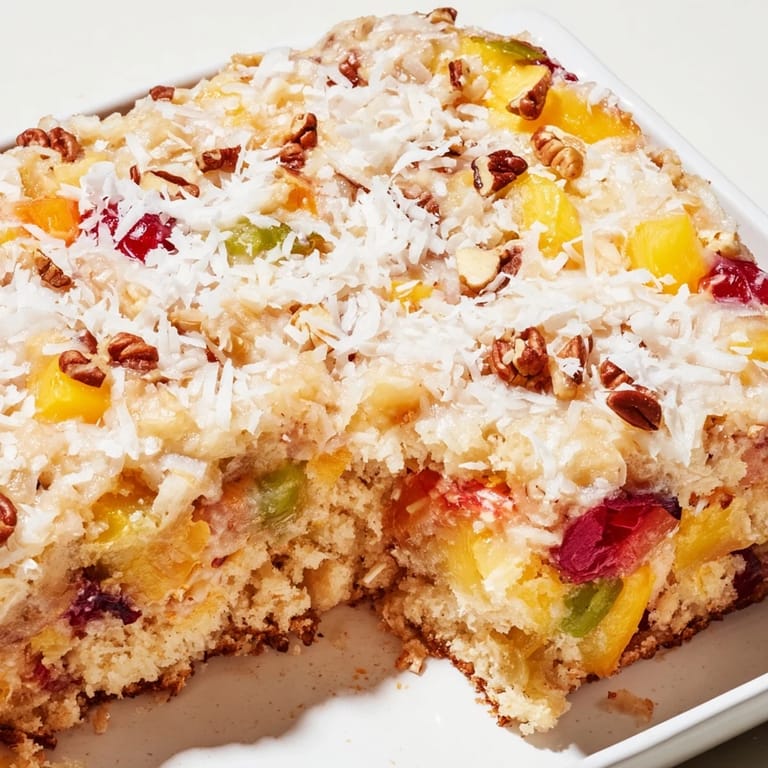
The texture depends almost entirely on respecting two things: the juice in that can and the timing of the frosting pour. I learned this the hard way by draining the fruit once out of habit, which resulted in a cake that was fine but forgettable. The second time, I used every drop of juice and poured the frosting while the cake was still releasing heat, and suddenly it transformed into something that stayed tender and moist for days instead of drying out by the next morning.
Variations and Substitutions
You can play with this recipe more than you might think while keeping its essential character intact. The frosting adapts beautifully to coconut milk in place of regular milk if you want deeper coconut flavor, and I've skipped the nuts plenty of times without missing them—the coconut does all the textural work. One variation I've tried is adding a quarter teaspoon of almond extract to the frosting, which sounds strange but makes the coconut taste more complex.
- Nut-free versions work perfectly if you just skip the pecans or walnuts and let the coconut shine.
- Serve warm with a scoop of vanilla ice cream if you want to turn a simple cake into a proper dessert.
- Store covered at room temperature for up to three days, though you'll find it disappearing much faster than that.
 Save to Pinterest
 This cake reminds me why I love baking—not because it's complicated or demands perfection, but because something this simple can bring people together and make them happy. It's the kind of dessert that tastes like care without requiring hours in the kitchen.
Frequently Asked Recipe Questions
- → What type of fruit cocktail is best for this cake?
Using canned fruit cocktail with juice, undrained, provides the best moisture and sweetness for the cake.
- → Can I make this cake nut-free?
Yes, simply omit the chopped pecans or walnuts from the coconut frosting for a nut-free version.
- → How do I prevent the cake from drying out?
Pouring the warm coconut frosting over the hot cake helps lock in moisture and keeps the cake tender and moist.
- → Is there a substitute for whole milk in the frosting?
You can use coconut milk to enhance the coconut flavor without altering the texture significantly.
- → Can I prepare the frosting in advance?
It's best to prepare and pour the coconut frosting immediately after baking to ensure it soaks into the warm cake properly.