 Save to Pinterest
 There's something about assembling a falafel bowl that reminds me why I fell in love with cooking in the first place—it's the moment when you step back and realize you've created something both nourishing and genuinely beautiful on a single plate. My neighbor actually introduced me to this version on a lazy Sunday afternoon, and I was struck by how she layered everything with such intention, letting the hummus and tzatziki pool into the greens like edible paint. What started as me copying her technique has become my go-to when I want something that feels fancy but takes practically no time. The best part? Everyone at your table will feel like they're eating at a proper Mediterranean restaurant, even if you made it at home in twenty minutes.
I made this for my sister during a surprise lunch visit, and watching her dig in with such enthusiasm made me realize that sometimes the simplest meals carry the most weight. She asked for the recipe immediately, which I found funny because there really isn't one in the traditional sense—it's more of a philosophy about balance and freshness. Now whenever she visits, this is what she requests, which has accidentally made me the falafel bowl expert in my family.
Ingredients
- Store-bought or homemade falafel (12 balls): These crispy, herb-filled spheres are the heart of your bowl, and honestly, using store-bought saves you time without sacrificing taste—just warm them up and you're halfway there.
- Hummus (1 cup): This creamy base is what holds the whole composition together, providing richness and a subtle earthiness that grounding everything else.
- Tzatziki (1 cup): The cooling counterpoint to warm spices, this cucumber-yogurt sauce brings brightness and helps balance the deeper flavors of the falafel.
- Tahini sauce (1/4 cup): Drizzled at the end, this nutty, luxurious finish ties all the elements together with a silky thread of flavor.
- Mixed salad greens (4 cups): I tend to mix arugula and spinach for peppery notes, but romaine works beautifully too if you prefer something more neutral.
- Cherry tomatoes (1 cup, halved): Their natural sweetness and juicy burst provide refreshing contrast to everything heavier in the bowl.
- Cucumber (1/2 cup, sliced): Crisp and watery, cucumber adds textural variety and echoes the coolness of the tzatziki in a fresh way.
- Red onion (1/4 cup, thinly sliced): A thin slice of red onion brings sharpness and a subtle bite that keeps the whole bowl from feeling too mellow.
- Shredded carrots (1/4 cup): Their subtle sweetness and bright color make the bowl feel more vibrant, plus they add a pleasant crunch.
- Fresh parsley (2 tablespoons, chopped): This final garnish isn't just decoration—it adds a peppery, herbaceous note that brightens everything.
- Toasted sesame seeds (1 tablespoon): Toast them yourself if you can; the difference in flavor is remarkable, and they add a satisfying crunch and nutty depth.
- Lemon wedges (for serving): Don't skip these—a squeeze of fresh lemon at the moment of eating ties the whole bowl together with brightness.
Tired of Takeout? 🥡
Get 10 meals you can make faster than delivery arrives. Seriously.
One email. No spam. Unsubscribe anytime.
Instructions
- Warm your falafel:
- If using store-bought, follow the package instructions—oven-baking gives you the crispiest result, though air frying also works beautifully. If you're making homemade falafel, prepare and cook them however you prefer, letting them cool slightly while you prep everything else.
- Create your base:
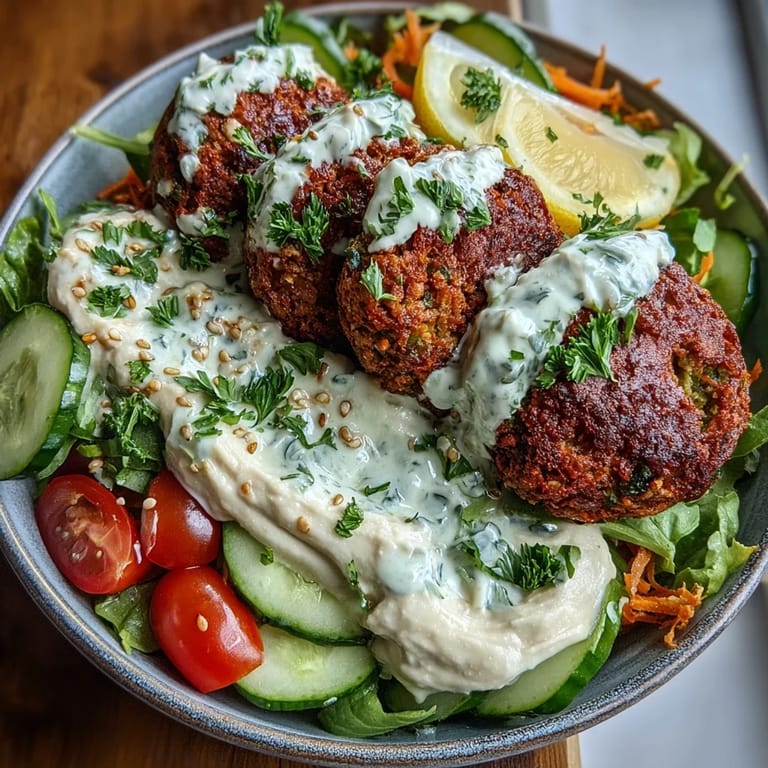
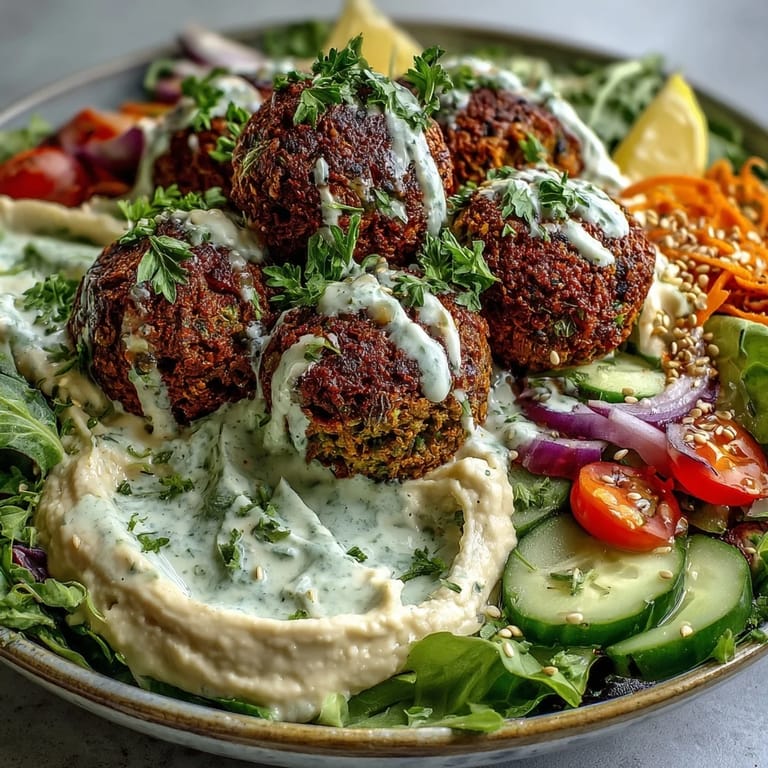
- Spoon a generous dollop of hummus onto the bottom of your serving bowl, then add a scoop of tzatziki beside it, letting them pool together naturally. This creates pockets of creaminess that you'll find with every bite.
- Build your greens layer:
- Arrange your mixed salad greens over the spreads, using enough to create a bed that holds everything else without getting lost. I like to leave some of the hummus and tzatziki peeking through at the edges.
- Arrange your vegetables:
- Scatter the cherry tomatoes, cucumber slices, red onion, and shredded carrots over the greens with intention—you're building layers of color and flavor, so take a moment to make it look as good as it tastes. The way everything is arranged matters more than you'd think.
- Crown with falafel:
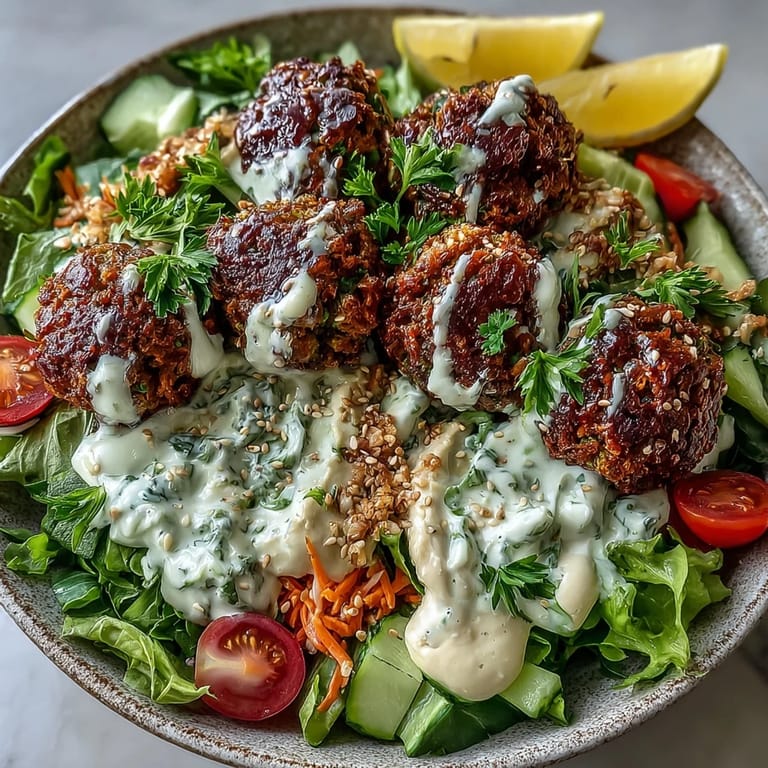
- Place three warm falafel balls on top of the vegetables, positioning them so they're visible and inviting. Their warmth will slightly soften the cool greens underneath, which is actually perfect.
- Drizzle and finish:
- Pour the tahini sauce in a gentle stream across the top, letting it cascade down the sides and pool in the greens. Sprinkle fresh parsley and toasted sesame seeds over everything, then nestle a lemon wedge on the side.
- Serve immediately:
- This bowl is best eaten right away while the falafel is still warm and the greens are still crisp, so gather everyone and dig in together.
 Save to Pinterest
 There was a moment last summer when my friend and I sat on my porch eating these bowls, barely speaking, just appreciating the way everything worked together—how the cool creamy elements played against the warm falafel, how the lemon tied it all together. It was one of those quiet meals that reminded me that good food doesn't need to be complicated to be meaningful.
Building Flavor Layers
What makes this bowl sing is the interplay between warm and cold, creamy and crispy, rich and fresh—and understanding this balance is what transforms it from a collection of ingredients into something cohesive. The hummus and tzatziki aren't just spreads; they're the foundation that every other element builds upon, so don't skimp on them. I've noticed that when I use really good hummus and tzatziki, even mediocre falafel tastes better because they amplify each other's best qualities.
Customizing Your Bowl
One of the beautiful things about this recipe is that it genuinely welcomes creativity and substitution—I've made it with roasted chickpeas instead of falafel when I was out, and I've added crumbled feta for a slightly different direction. Think of this as a template rather than a rigid instruction, a framework you can play within based on what's in your kitchen and what you're craving. My only rule is to keep at least three different textures in each bowl, because that's what keeps you interested from the first bite to the last.
Storage and Make-Ahead Tips
If you're thinking ahead, you can prep all the components separately and assemble individual bowls right before serving, which is honestly my preferred approach for dinner parties. Store your greens, vegetables, and spreads separately in the fridge for up to a day, and keep your falafel in an airtight container so it stays crispy. Here's what I've learned from doing this many times:
- Assemble your bowls no more than fifteen minutes before eating to keep everything at its best.
- If you're making this for meal prep, pack the components separately and assemble at lunch for maximum freshness.
- Leftover falafel can be gently reheated in a 350-degree oven for about five minutes, restoring some of that original crispiness.
 Save to Pinterest
 This falafel bowl has become my answer to the question of what to cook when you want something that feels both nourishing and exciting, without actually requiring much fuss. Make it for yourself on a Tuesday when you need a little magic in your afternoon.
Frequently Asked Recipe Questions
- → Can I make this bowl ahead of time?
Yes, prepare components separately and store in airtight containers. Assemble bowls just before serving to keep vegetables crisp and falafel from getting soggy.
- → What vegetables work best in this bowl?
Mixed greens, cherry tomatoes, cucumber, and red onion provide crunch and flavor. You can also add bell peppers, shredded radish, or roasted eggplant depending on preference.
- → How do I keep falafel crispy?
Warm store-bought falafel according to package directions, typically in a 375°F oven for 10-12 minutes. Avoid microwaving as it creates steam and makes them soft.
- → Can I make this vegan?
Use dairy-free tzatziki or omit it entirely. The hummus and tahini provide plenty of creaminess. Check that store-bought falafel doesn't contain egg or dairy.
- → What protein alternatives can I use?
Grilled chicken, roasted chickpeas, or lamb kefta work well. For plant-based options, try marinated tofu or tempeh cubes seasoned with za'atar and cumin.