 Save to Pinterest
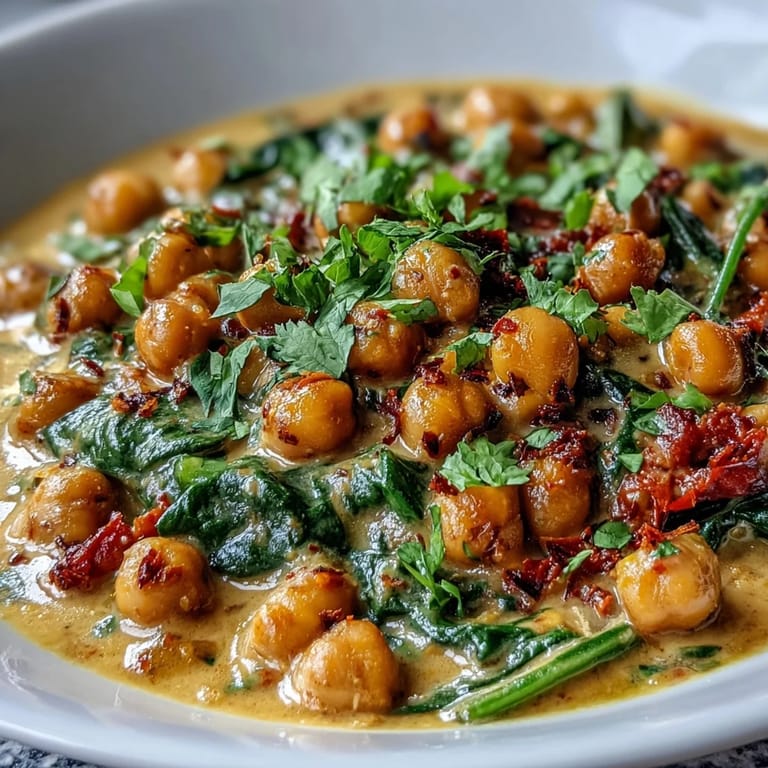
 There's something about the smell of cumin hitting hot oil that instantly transports me to a tiny kitchen in London where my roommate, Priya, taught me this curry on a rainy Tuesday evening. She moved so quickly through the prep work, barely glancing at measurements, while I scrambled to keep up with my notebook. What struck me most wasn't the technique, but how she'd pause to inhale the spice-laden steam and nod with satisfaction, as if the aroma itself told her when things were right. This chickpea curry became my go-to comfort meal, especially on nights when I needed something warm, filling, and reassuringly simple to execute.
I made this for a dinner party last autumn when one guest mentioned she'd gone vegan, and instead of panicking, I remembered Priya's curry and realized I had most of what I needed already in my pantry. My friend took a bite, closed her eyes, and asked for the recipe before finishing her bowl, which felt like a small victory in the kitchen. That's when I understood this dish wasn't just convenient, it was genuinely delicious enough to stand proudly on any table.
Ingredients
- Vegetable oil: Use something neutral like canola or sunflower oil; coconut oil works beautifully too if you want a subtle sweetness underlying the spices.
- Onion: A large one, finely diced, becomes the sweet foundation that mellows the heat and builds flavor depth as it softens.
- Garlic and ginger: Fresh is non-negotiable here, as it wakes up the entire dish and prevents that flat, powdery taste you'd get from dried versions.
- Ground cumin, coriander, turmeric, and garam masala: These four are the heart of the curry, so make sure your spice jars aren't ancient; old spices taste like dust.
- Chili powder and paprika: Chili gives heat, paprika adds warmth and mild smokiness without overwhelming, so adjust both to match your tolerance.
- Chickpeas: Two cans, drained and rinsed well to remove excess sodium and the slightly metallic taste that can linger if you skip this step.
- Coconut milk: Full-fat is truly the difference between a thin sauce and a luscious one; don't reach for the light version here.
- Diced tomatoes: One can with all its juices adds acidity that brightens the richness and keeps the curry from feeling heavy.
- Vegetable broth or water: This adjusts the consistency, so keep it nearby and add gradually rather than all at once.
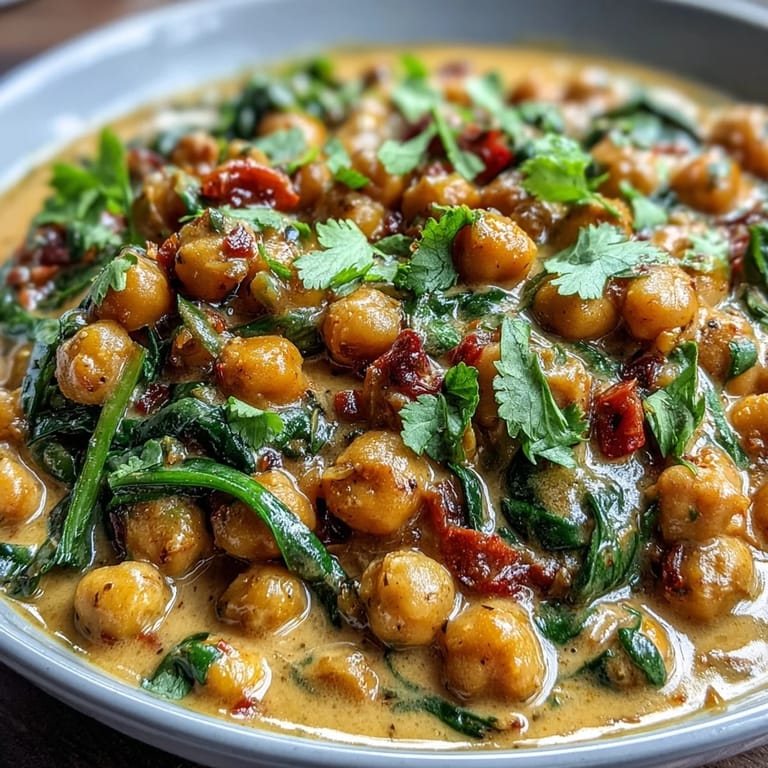
- Baby spinach: Optional but wonderful for adding a nutritious green note that wilts into the curry so gently you barely notice it's there.
- Lime juice: Squeeze it fresh at the end; bottled lime juice tastes tinny and misses the point entirely.
- Fresh cilantro and lime wedges: These garnishes are your final flavor burst and make the dish feel finished and thoughtfully plated.
Tired of Takeout? 🥡
Get 10 meals you can make faster than delivery arrives. Seriously.
One email. No spam. Unsubscribe anytime.
Instructions
- Build Your Base with Oil and Aromatics:
- Heat the vegetable oil in a large skillet or saucepan over medium heat until it shimmers slightly. Add the diced onion and let it soften for about four to five minutes, stirring occasionally, until it turns translucent and fragrant.
- Layer in Garlic and Ginger:
- Stir in the minced garlic and grated ginger, cooking for just one minute while stirring constantly. You'll notice the kitchen suddenly smells completely different, alive with warmth.
- Toast the Spices Until Fragrant:
- Add all your ground spices, salt, and pepper to the pan at once, then stir continuously for about one minute. This toasting step unlocks the oils in the spices and prevents them from tasting raw or harsh.
- Combine Everything into a Simmer:
- Pour in the drained chickpeas, diced tomatoes with their juices, coconut milk, and vegetable broth, stirring well to blend everything evenly. Bring the mixture to a gentle simmer, then cover and let it bubble away for fifteen minutes while you take a breath.
- Finish with Greens and Brightness:
- Uncover the pan and stir in the baby spinach if using, letting it wilt for a couple of minutes until it softens. Squeeze in the fresh lime juice, taste the curry, and adjust salt and spices until it feels right to you.
- Serve with Warmth and Intention:
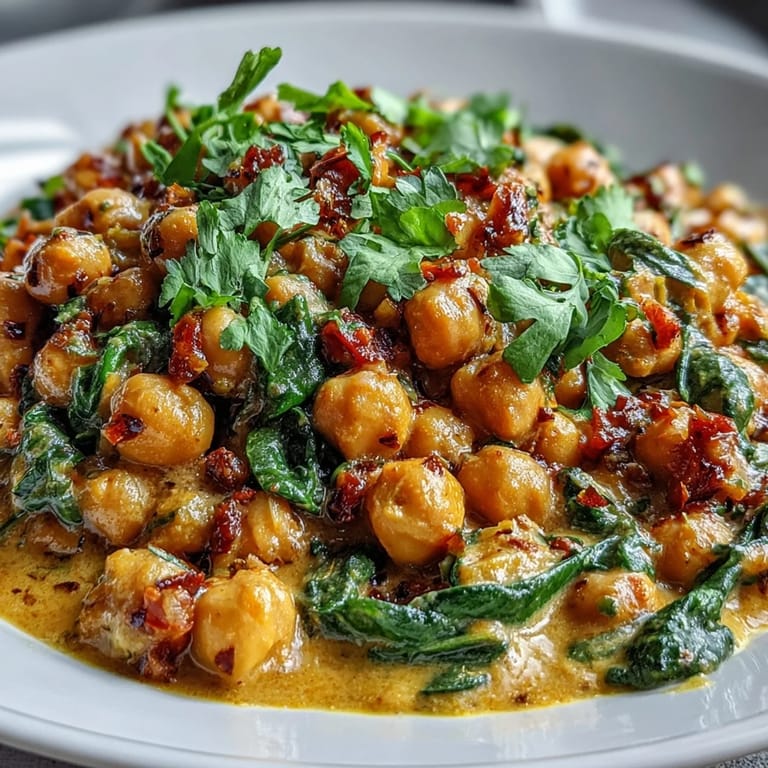
- Ladle the curry into bowls, scatter cilantro over the top, and serve with lime wedges alongside steamed rice or naan. The contrast between the creamy curry and the bright squeeze of lime is where the magic truly lives.
 Save to Pinterest
 The moment someone asks for seconds and then mentions it tastes like a restaurant version, you know you've nailed something fundamental. I've made this curry dozens of times now, often on weeknight evenings when I'm tired but hungry for something that feels indulgent without being complicated.
The Science Behind Spice Toasting
When you toast spices in hot oil for that crucial minute, you're releasing compounds that have been locked away in their molecular structure, transforming a collection of dried ground bits into something genuinely aromatic and alive. I learned this the hard way by skipping that step once, thinking it seemed unnecessary, and ended up with a curry that tasted vaguely of spice rather than deeply spiced. Now I never rush past it, and honestly, that one minute makes all the difference between a meal that's just fine and one that tastes like someone who knows what they're doing made it.
Why Coconut Milk Changes Everything
The full-fat version isn't just richer; it also contains natural emulsifiers that help create a silky, cohesive sauce rather than a thin broth with separate layers of oil floating on top. The first time I grabbed a can of lite coconut milk thinking it wouldn't matter, I ended up with something that felt more like soup than curry. Full-fat coconut milk, even though it seems indulgent, is actually the more elegant choice because it behaves the way you want it to in the pan, coating each chickpea and vegetable evenly while the spices cling to it beautifully.
Storage, Reheating, and Variations That Actually Work
This curry keeps beautifully in the refrigerator for up to four days, and honestly, it often tastes even better on day two or three once the flavors have had time to deepen and mingle. When reheating, do it gently over medium heat with a splash of water or broth to loosen things up slightly, rather than blasting it in the microwave, which can separate the coconut milk and make it grainy. If you want to vary the vegetables, try diced sweet potato, bell pepper, or cauliflower florets, each of which absorbs the curry sauce in slightly different ways.
- For a thicker, more concentrated curry, simmer uncovered for the final five minutes and let evaporation work its magic naturally.
- Adjust the chili powder up if you want real heat or down to almost nothing if you're cooking for people who prefer milder flavors.
- Serve alongside jasmine rice, basmati rice, or gluten-free flatbread, depending on what calls to you on a given evening.
 Save to Pinterest
 Every time I make this curry, I'm reminded of Priya laughing in that London kitchen and how something so simple can become a reliable friend you turn to again and again. It's the kind of dish that asks very little of you but somehow gives back so much warmth and satisfaction.
Frequently Asked Recipe Questions
- → How spicy is this curry?
The spice level is mild to medium, easily adjustable by varying the chili powder. Start with half the amount for a milder version, or add fresh chilies for extra heat.
- → Can I make this curry ahead?
Absolutely. The flavors actually deepen and improve when made ahead. Store in the refrigerator for up to 4 days, or freeze for up to 3 months. Reheat gently on the stovetop.
- → What can I serve with chickpea curry?
Basmati rice, brown rice, or naan bread are classic accompaniments. It also pairs well with quinoa, roti, or roasted cauliflower for a low-carb option.
- → How do I make the curry thicker?
Simmer uncovered for the last 5-10 minutes to reduce and thicken the sauce. You can also mash some chickpeas against the side of the pan to create a creamier texture.
- → Can I add other vegetables?
Diced sweet potato, bell peppers, cauliflower, or green beans work beautifully. Add hearty vegetables like sweet potato during the simmering stage, and quick-cooking vegetables like spinach near the end.
- → Is full-fat coconut milk necessary?
Full-fat creates the richest, most luxurious texture. Light coconut milk works but yields a thinner sauce. For the creamiest results, use full-fat and shake the can well before opening.