 Save to Pinterest
 Chess pie showed up at my grandmother's table every Thanksgiving without fail, and for years I never thought to ask why it was called that or where it came from. One afternoon while helping her prep for dinner, she pulled out a worn index card with the recipe and said it was the easiest pie she'd ever mastered, something about how the filling practically made itself. When I finally made one alone in my own kitchen, watching that simple custard transform into something with a crispy top and silky center, I understood why she'd kept making it for decades.
I brought chess pie to a potluck once without even thinking about it, and watching people go back for seconds before they'd barely finished their main course told me everything I needed to know. Someone asked if it was a family recipe, and I realized that by then it had become one, even though it was only the second time I'd made it.
Ingredients
- 1 unbaked 9-inch pie crust: This is your canvas, whether you make it from scratch or grab one from the store—both work beautifully and no one will know the difference.
- 1 1/2 cups granulated sugar: This is what creates that signature crystalline top and sweetness that balances the richness underneath.
- 1/2 cup unsalted butter, melted and cooled: Cooling it slightly keeps the eggs from scrambling when you combine everything.
- 4 large eggs: These bind everything together and create that custard-like texture that makes chess pie special.
- 1 tablespoon cornmeal: A small amount adds a subtle texture and helps prevent the filling from being too silky smooth.
- 1 tablespoon all-purpose flour: This stabilizes the filling so it sets properly without becoming rubbery.
- 1/4 teaspoon salt: Just enough to make the sweetness sing without tasting salty.
- 1/4 cup whole milk: Keeps the filling tender and adds a slight richness that cream would overpower.
- 1 teaspoon vanilla extract: A gentle flavor that rounds out everything without announcing itself.
- 1 tablespoon white vinegar: Optional, but it adds a whisper of tang that keeps the pie from tasting one-note.
Tired of Takeout? 🥡
Get 10 meals you can make faster than delivery arrives. Seriously.
One email. No spam. Unsubscribe anytime.
Instructions
- Heat your oven and ready the crust:
- Preheat to 350°F and settle your pie crust into a 9-inch dish, crimping the edges however feels natural to your hands. You're not trying to be perfect here; slightly rustic looks better anyway.
- Build the filling:
- Whisk together sugar, cooled melted butter, eggs, cornmeal, flour, and salt until the mixture is completely smooth and there are no flour streaks hiding in the corners. This takes about two minutes and feels almost meditative.
- Finish the mixture:
- Add milk, vanilla, and vinegar if you're using it, whisking until everything is silky and unified. The filling should look like a thick custard sauce at this point.
- Pour and bake:
- Slide the filling into your waiting crust and place the pie in the oven. Bake for 45 to 50 minutes until the center has just set but still has the slightest jiggle if you gently shake the dish—it will continue cooking slightly as it cools.
- Cool and rest:
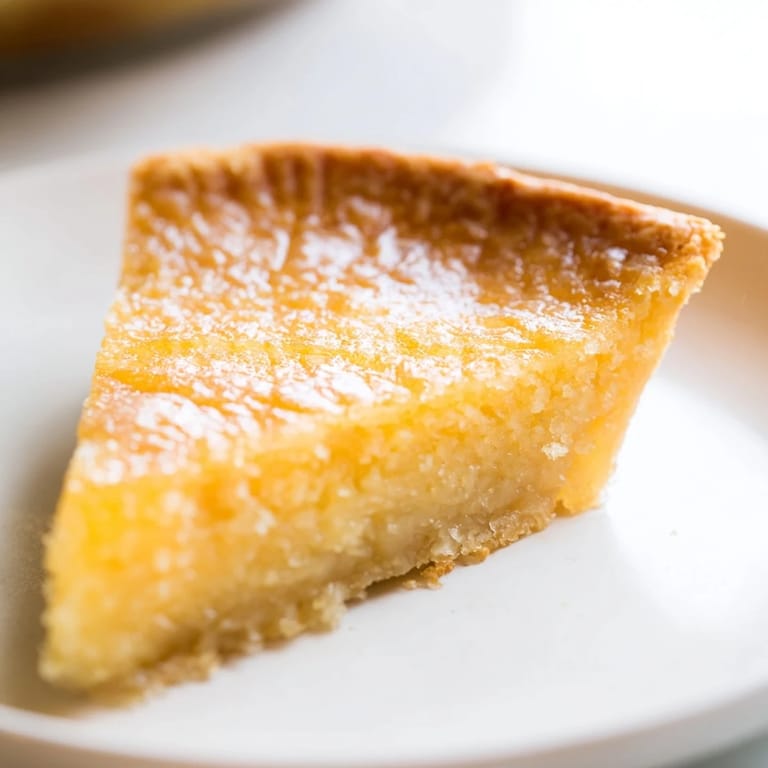
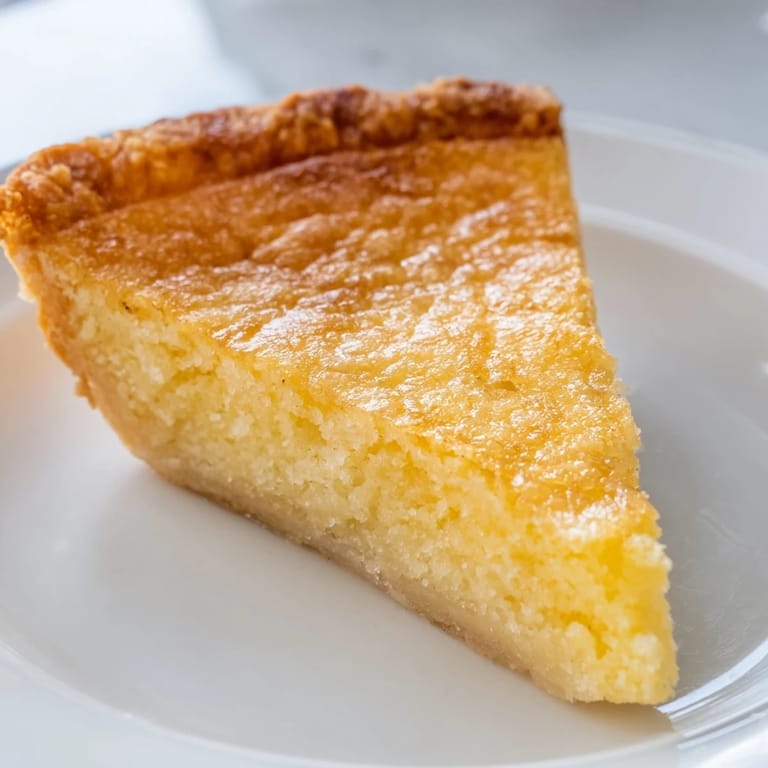
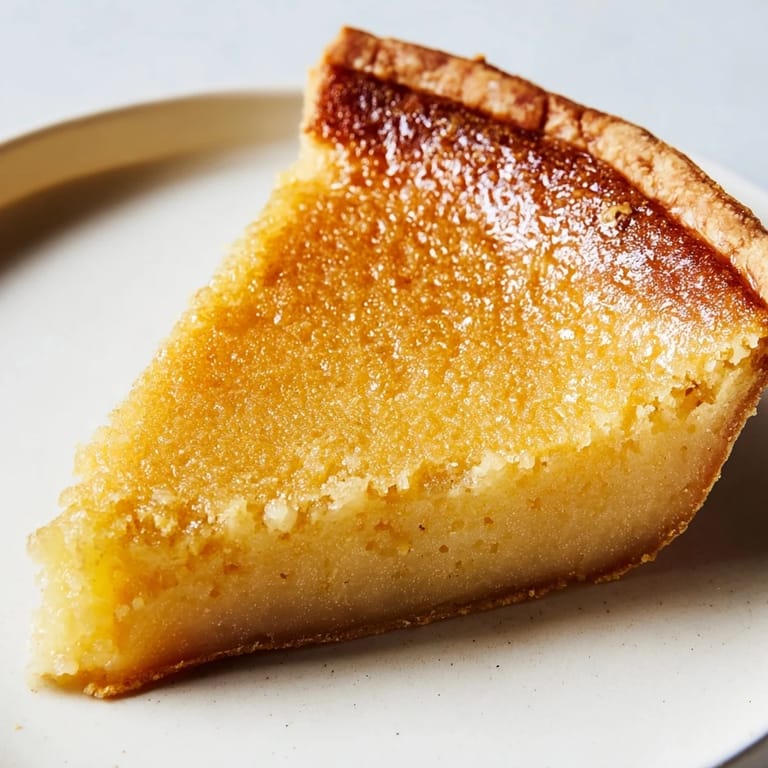
- Let the pie sit on a wire rack until it reaches room temperature, which gives the filling time to fully set and develop that signature texture. Slice once it's completely cool, and watch that beautiful golden top crackle beneath the knife.
 Save to Pinterest
 My neighbor knocked on my door one evening asking if something smelled amazing, and it turned out she could smell the chess pie baking from her kitchen next door. We ended up sharing a slice on her porch as the sun set, and she said it reminded her of her own grandmother's kitchen, which made the whole afternoon feel less about dessert and more about connection.
The Secret Behind the Top
That distinctive golden, crackled surface is what separates chess pie from every other custard pie, and it happens because of the sugar-egg-butter ratio and the exact baking temperature. The combination creates a thin crust that catches and caramelizes while the filling stays creamy underneath, and getting that balance right is easier than most people think. The key is trusting the process and not opening the oven door to peek, because the temperature drop can affect how the top sets.
Why It's Called Chess Pie
The name's origin is lost to time, which somehow makes it even more charming—some say it comes from "chest pie" because it was stored in a chest, others claim it's a mishearing of "chess" from an old English word, and nobody's entirely sure anymore. What matters is that the pie itself has stayed remarkably unchanged for generations, a rare constant in American dessert history. Every version tastes essentially the same because the formula is so simple and so right that there's nowhere to go but down if you mess with it.
Serving and Storage
Chess pie is forgiving in almost every way, including how long it lasts and how many forms it can take. Serve it plain to let that simple custard shine, or dress it up with whipped cream, fresh berries, or even a light dusting of nutmeg if you're feeling adventurous. Just remember that it sits perfectly fine at room temperature for a couple of days, which means you can make it the day before and skip that last-minute stress.
- A dollop of whipped cream transforms it into something elegant without any real effort.
- Fresh raspberries or blackberries cut through the sweetness and add brightness.
- Keep it covered loosely so it doesn't dry out, and slice with a warm, clean knife for the cleanest cuts.
 Save to Pinterest
 Chess pie asks very little of you and gives back generously, which is maybe why it's survived this long. Make it once and you'll understand why it keeps showing up on tables year after year.
Frequently Asked Recipe Questions
- → What gives the pie its unique texture?
The addition of cornmeal and flour to the custard mixture creates a slightly grainy but smooth texture that sets this pie apart.
- → Can I use a store-bought crust?
Absolutely. A pre-made 9-inch pie crust works well and saves time while maintaining the desired crispness.
- → What is the purpose of vinegar in the filling?
Vinegar adds a subtle tang that balances the sweetness, but it is optional and can be omitted for a milder flavor.
- → How do I know when the pie is done baking?
The pie is ready when the center is just set, and the top is a rich golden brown, usually after about 45-50 minutes at 350°F.
- → What are some recommended serving suggestions?
Serve chilled or at room temperature alongside fresh berries or a dollop of whipped cream for enhanced flavor and presentation.