 Save to Pinterest
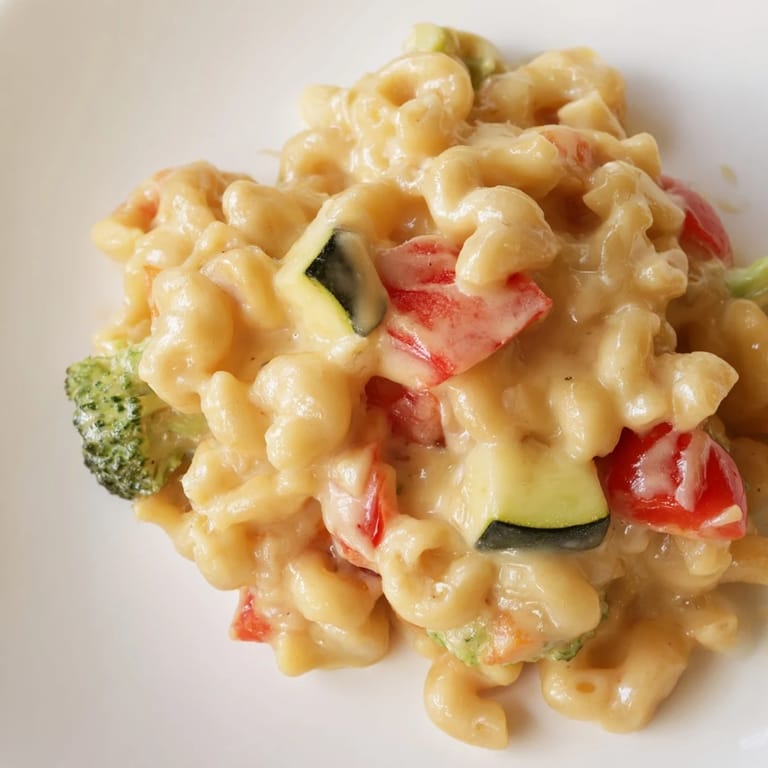
 There's a particular kind of quiet satisfaction that comes from stirring a pot of bubbling cheese sauce while the oven fills your kitchen with the sweet, caramelized smell of roasting vegetables. I wasn't always someone who added vegetables to mac and cheese. For years, I kept them separate, like they belonged in different worlds. Then one Sunday, I had leftover roasted peppers and zucchini sitting in the fridge, and instead of reheating them sadly on the side, I folded them into a fresh batch of creamy macaroni. The sweetness from the roasted veggies cut through the richness in a way that felt almost accidental, but completely right.
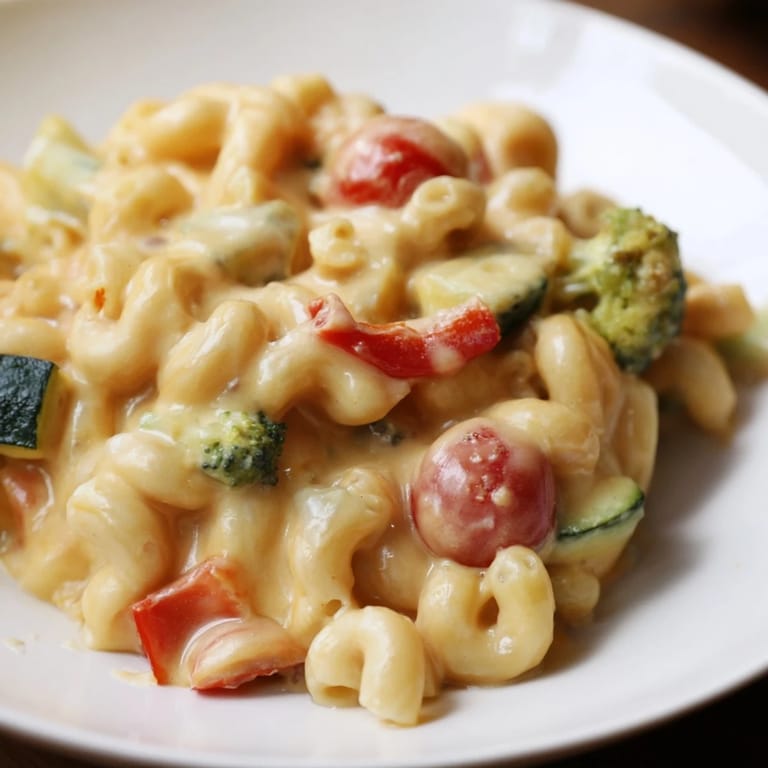
I made this for a group of friends who claimed they didn't like vegetables mixed into their pasta. They were skeptical when I brought the dish to the table, eyeing the flecks of red pepper and broccoli with suspicion. But after the first bite, the room went quiet in that good way, where everyone's too busy eating to talk. One friend, who had been the most vocal critic, went back for seconds without a word. Sometimes the best vindication in the kitchen is just watching people eat.
Ingredients
- Elbow macaroni: The classic shape holds onto cheese sauce in every curve, and cooking it just to al dente means it won't turn mushy when you toss it with the hot sauce.
- Red bell pepper: Roasting transforms it from crisp and sharp to sweet and almost jammy, adding little pockets of concentrated flavor throughout the dish.
- Zucchini: Dice it small enough that it softens and nearly melts into the sauce, contributing moisture and a subtle earthiness without taking over.
- Red onion: It caramelizes beautifully in the oven, turning mellow and sweet, which balances the sharpness of the cheddar.
- Cherry tomatoes: They burst and release their juices while roasting, creating tiny flavor bombs that brighten every forkful.
- Broccoli florets: The edges get crispy and nutty in the oven, adding textural contrast to the creamy pasta.
- Olive oil: A generous coating helps the vegetables brown evenly and prevents them from drying out in the high heat.
- Unsalted butter: The foundation of your roux, giving the sauce body and a subtle richness that neutral oils can't match.
- All purpose flour: It thickens the milk into a silky sauce, and cooking it for a full minute removes any raw flour taste.
- Whole milk: The fat content creates a luscious, creamy sauce that clings to the pasta without feeling greasy.
- Sharp cheddar cheese: It provides the bold, tangy flavor that defines a proper mac and cheese, melting smoothly when shredded fresh.
- Mozzarella cheese: Adds stretchy, gooey texture without overwhelming the other flavors.
- Parmesan cheese: A touch of nuttiness and salt that deepens the overall flavor and helps the sauce come together.
- Mustard powder: Just a hint cuts through the richness and makes the cheese taste more like itself.
- Garlic powder: A whisper of savory warmth that doesn't overpower the vegetables or cheese.
Tired of Takeout? 🥡
Get 10 meals you can make faster than delivery arrives. Seriously.
One email. No spam. Unsubscribe anytime.
Instructions
- Get the oven ready:
- Preheat your oven to 220°C (425°F) and line a baking sheet with parchment paper to prevent sticking and make cleanup easier. The high heat is essential for caramelization, not just cooking.
- Prep and season the vegetables:
- Toss the bell pepper, zucchini, red onion, cherry tomatoes, and broccoli with olive oil, salt, and black pepper in a large bowl until everything is evenly coated. Spread them in a single layer on the baking sheet so they roast rather than steam.
- Roast until caramelized:
- Slide the sheet into the oven for 20 to 25 minutes, stirring once halfway through to ensure even browning. You want tender vegetables with golden, slightly charred edges that smell sweet and nutty.
- Cook the pasta:
- While the vegetables roast, bring a large pot of salted water to a boil and cook the macaroni until al dente according to the package directions. Drain it well and set it aside, resisting the urge to rinse it.
- Start the cheese sauce:
- Melt butter in a large saucepan over medium heat, then whisk in the flour and cook for about a minute, stirring constantly. This creates a roux that will thicken your sauce without lumps.
- Add the milk:
- Gradually pour in the milk while whisking continuously to keep the mixture smooth. Keep stirring for 3 to 5 minutes until the sauce thickens enough to coat the back of a spoon.
- Melt in the cheese:
- Lower the heat and add the cheddar, mozzarella, and Parmesan, stirring until everything melts into a smooth, glossy sauce. Stir in the mustard powder and garlic powder, then taste and adjust the salt and pepper.
- Combine everything:
- Add the cooked macaroni and roasted vegetables to the cheese sauce, folding gently until every piece is coated and the vegetables are distributed evenly. Let it heat through for a minute or two, stirring occasionally.
- Serve warm:
- Spoon the mac and cheese into bowls while it's still steaming, and finish with a sprinkle of extra Parmesan if you like. It's best enjoyed immediately, when the sauce is at its creamiest.
 Save to Pinterest
 I remember serving this to my niece, who had declared war on all green vegetables for most of her childhood. She picked out a piece of broccoli with her fork, examined it suspiciously, then ate it without complaint. Later, she asked if we could make this again next week. In that moment, I realized this dish had become more than just dinner. It was proof that the right combination of cheese, patience, and a hot oven can make almost anyone reconsider their relationship with vegetables.
Choosing Your Vegetables
The vegetables listed here are just a starting point, not a strict rule. I've swapped in diced carrots when I wanted more sweetness, mushrooms for earthiness, and handfuls of fresh spinach stirred in at the very end. Seasonal vegetables work beautifully, so use what looks good at the market or what's threatening to wilt in your refrigerator. Just keep the pieces roughly the same size so everything roasts evenly, and aim for a mix of textures and colors. The key is roasting them until they're genuinely caramelized, not just softened, because that's where the flavor depth comes from.
Making It Your Own
If you want a crispy top, transfer the finished mac and cheese to a baking dish, sprinkle it with panko breadcrumbs mixed with a little melted butter, and slide it under the broiler for 2 to 3 minutes. Watch it closely because the line between golden and burnt is thin. For a lighter version, you can use half and half instead of whole milk, though the sauce won't be quite as rich. I've also made this with a mix of Gruyere and white cheddar when I wanted something a bit more sophisticated, and it was excellent. The beauty of this recipe is that it's forgiving and adaptable, so don't be afraid to experiment based on your mood or what's in your pantry.
Serving and Storing
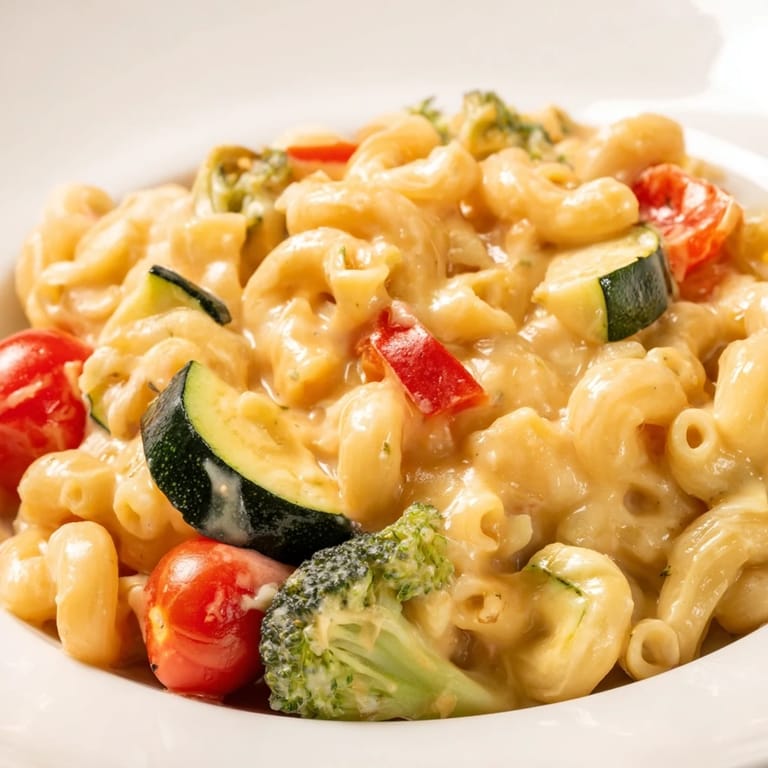
This mac and cheese is best eaten fresh, when the sauce is silky and clings to the pasta without separating. If you do have leftovers, store them in an airtight container in the refrigerator for up to three days. Reheating can be tricky because the sauce tends to break and turn grainy. I've had the best luck adding a splash of milk and reheating gently on the stovetop over low heat, stirring frequently. A crisp green salad on the side and a glass of chilled Sauvignon Blanc balance the richness nicely, though honestly, a simple handful of arugula dressed with lemon juice works just as well.
- Pair it with a light, acidic side like a citrus salad to cut through the creaminess.
- Serve it in shallow bowls rather than deep ones so you get a good ratio of pasta to sauce in every spoonful.
- Garnish with fresh herbs like basil or parsley if you want a pop of color and freshness at the end.
 Save to Pinterest
 There's something deeply reassuring about a bowl of mac and cheese that doesn't make you choose between comfort and something that feels nourishing. This version gives you both, and it tastes like you put in more effort than you actually did.
Frequently Asked Recipe Questions
- → Can I prepare this dish in advance?
Yes, you can roast the vegetables and cook the pasta several hours ahead. Prepare the cheese sauce just before serving to ensure the creamiest texture, then combine all components and heat through gently over low heat.
- → What vegetables work best for roasting?
Any firm or semi-firm vegetables work well. Try carrots, mushrooms, Brussels sprouts, spinach, or cauliflower. Cut pieces to similar sizes for even cooking, and roast at 220°C until tender and caramelized, about 20-25 minutes.
- → How do I prevent the cheese sauce from becoming grainy?
Keep the heat at medium or low when melting cheese, and stir constantly. Ensure the roux and milk mixture is smooth and slightly thickened before adding cheese. Never use high heat once cheese is incorporated.
- → Can I add a crispy topping?
Absolutely. Sprinkle breadcrumbs mixed with melted butter or grated Parmesan over the finished dish, then broil for 2-3 minutes until golden and crispy.
- → What wine pairs well with this dish?
A crisp white wine like Sauvignon Blanc complements the creamy cheese sauce and roasted vegetables beautifully, cutting through the richness with its acidity.
- → How should I store leftovers?
Store in an airtight container in the refrigerator for up to three days. Reheat gently over low heat with a splash of milk to restore creaminess, or microwave in short intervals, stirring between each.