 Save to Pinterest
 My first real bowl of miso soup came on a cold morning in a small Tokyo kitchen, steam rising from a ceramic cup while my host explained that this wasn't fancy cooking—it was the opposite, actually. She moved so casually through the steps, whispering a warning not to boil the miso after adding it, that I realized this simple soup was built on respect for ingredients rather than technique. Twenty minutes later, I understood why Japanese people reach for this soup the way others reach for coffee, and why it's been nourishing people for centuries.
I made this for a friend who was running on empty after a brutal week, and watching her shoulders drop as she took that first sip reminded me that sometimes the most nourishing thing isn't about the ingredients themselves. It's about someone taking ten minutes to make you feel cared for, even when life is loud and overwhelming.
Ingredients
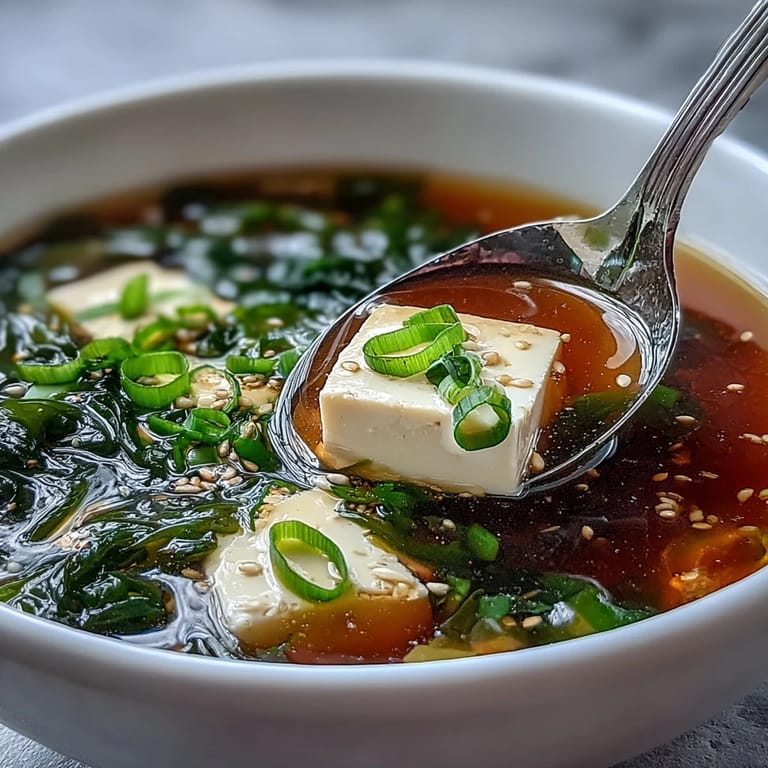
- Dashi stock (4 cups): This is your foundation—vegetarian dashi made from kombu seaweed and shiitake mushrooms works beautifully if you're avoiding fish, and honestly tastes just as deep and satisfying.
- Miso paste (3 tablespoons): White or yellow miso gives you a gentler, slightly sweet flavor; if you're feeling adventurous, mixing red and white creates more complexity that lingers.
- Silken tofu (200g): The silky kind matters here—it practically melts on your tongue and has the texture of something that shouldn't be as delicious as it is.
- Dried wakame seaweed (2 tablespoons): It transforms from papery and brittle into tender ribbons, and brings an oceanic umami that makes everything taste more intentional.
- Scallions (2, finely sliced): These go in at the very end and catch you with their bright, oniony freshness right when the soup gets a little quiet.
Tired of Takeout? 🥡
Get 10 meals you can make faster than delivery arrives. Seriously.
One email. No spam. Unsubscribe anytime.
Instructions
- Warm your dashi gently:
- Pour your dashi into a medium saucepan and let it come to a gentle simmer over medium heat—you want it barely bubbling, almost contemplative. Rushing this or cranking the heat won't make it faster; it'll just make it feel aggressive.
- Rehydrate the wakame:
- While the broth is warming, drop your dried wakame into a small bowl of cold water and let it sit for five minutes. You'll watch it transform from something that looks like it belongs in a craft project into actual tender seaweed, then drain it well.
- Dissolve the miso properly:
- Scoop the miso paste into a separate small bowl and pour a ladleful of the hot dashi over it, then whisk it smooth—this keeps lumps from hiding in your finished soup. The paste should become silky and completely dissolved before it goes back in.
- Add tofu and seaweed:
- Gently slide the tofu cubes and drained wakame into your simmering dashi and let it all warm through for two to three minutes, being careful and almost reverential with the tofu so it stays intact. You're not looking for a boil, just a gentle integration.
- Finish with miso, never boiling:
- Remove the pan from heat, then stir in your dissolved miso—this is the crucial moment where patience pays off. If you let it boil after adding miso, you'll destroy the probiotics and flatten the flavor into something one-dimensional.
- Serve with intention:
- Ladle into bowls, scatter those bright scallion slices on top, and serve immediately while everything is still steaming and hopeful.
 Save to Pinterest
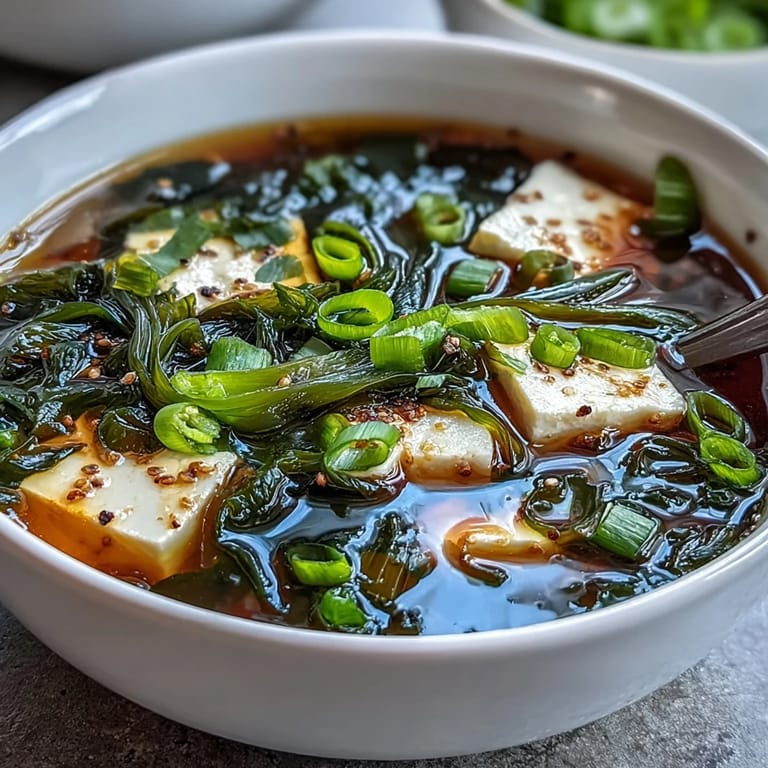
 There's a moment in this recipe where you realize you're not making soup—you're creating a moment of calm in someone's day. I understood this when a coworker came back to her desk with a bowl and just sat quietly for five minutes, and somehow that told me everything about what simple food can do.
The Miso Flavor Equation
White and yellow miso are gentle and slightly sweet, which is why they're traditional for this soup; red miso brings more funk and depth if you want to experiment. Try mixing two tablespoons of white with one tablespoon of red next time—it adds complexity without overwhelming the delicate tofu and seaweed. The sweetness in white miso also balances perfectly with the saltiness of the dashi, creating something that tastes both comforting and sophisticated.
Variations That Actually Work
Mushrooms deserve a special mention here because thinly sliced shiitake or even button mushrooms add an earthy layer that makes the whole thing taste more substantial. Fresh spinach wilts beautifully right at the end, and adds a mineral quality that your body feels immediately. I've even added a thin slice of ginger to the broth while it simmers, which brings something alive that catches you off guard in the best way.
Beyond the Basic Bowl
This soup doesn't need much, but it loves quiet company—serve it alongside steamed rice to turn it into a light meal, or pair it with a simple green salad if you want something fresher. The key is not overthinking it; let the soup be the star and let everything else support what it's already doing beautifully.
- A whisper of sesame oil drizzled on top right before eating adds richness without loudness.
- Leftover soup stays good in the fridge for two days, but don't add the scallions until just before serving or they'll lose their snap.
- Make extra dashi ahead if you know you'll be making this regularly—having it on hand removes the last barrier between you and comfort food.
 Save to Pinterest
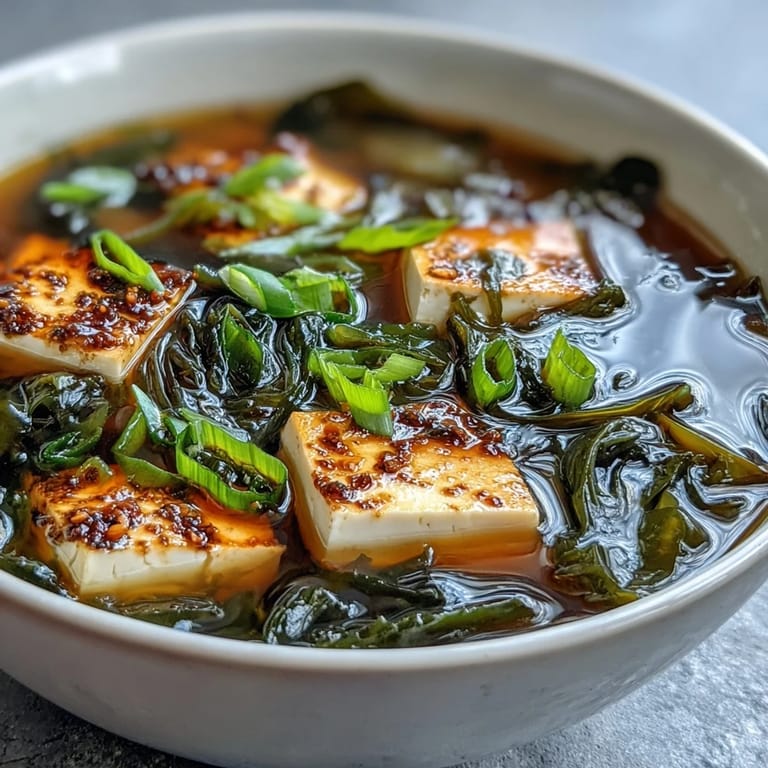
 This soup taught me that sometimes the most nourishing thing you can make is the simplest one. It's still the first thing I make when someone needs comfort without questions.
Frequently Asked Recipe Questions
- → What type of miso paste works best?
White or yellow miso paste provides a milder, slightly sweet flavor ideal for everyday enjoyment. Red miso offers a deeper, more intense taste. Mixing both creates complexity. Always dissolve the paste in a small amount of hot broth before adding to the main pot for smooth incorporation.
- → Can I make this vegan?
Absolutely. Traditional dashi often contains bonito flakes, but vegetarian dashi made from kombu seaweed and dried shiitake mushrooms works beautifully. Check your miso paste label to ensure no fish-based ingredients are included. The result remains authentic and delicious.
- → Why shouldn't I boil miso paste?
Boiling miso paste destroys beneficial probiotics and enzymes that make it nutritionally valuable. High heat also creates an unpleasant bitter taste and alters the delicate fermentation profile. Always remove the broth from heat before stirring in dissolved miso, then serve immediately.
- → What vegetables can I add?
Slice shiitake mushrooms, fresh spinach, bok choy, or daikon radish make excellent additions. Add heartier vegetables like mushrooms or radish during simmering, but stir delicate greens like spinach in just before serving to maintain texture and vibrant color.
- → How long does leftover soup keep?
Store cooled soup in an airtight container for up to 2-3 days in the refrigerator. Reheat gently over low heat, avoiding boiling to preserve miso's beneficial properties. The tofu may become slightly firmer, and flavors will continue developing over time. Note that seaweed expands significantly as it sits.