 Save to Pinterest
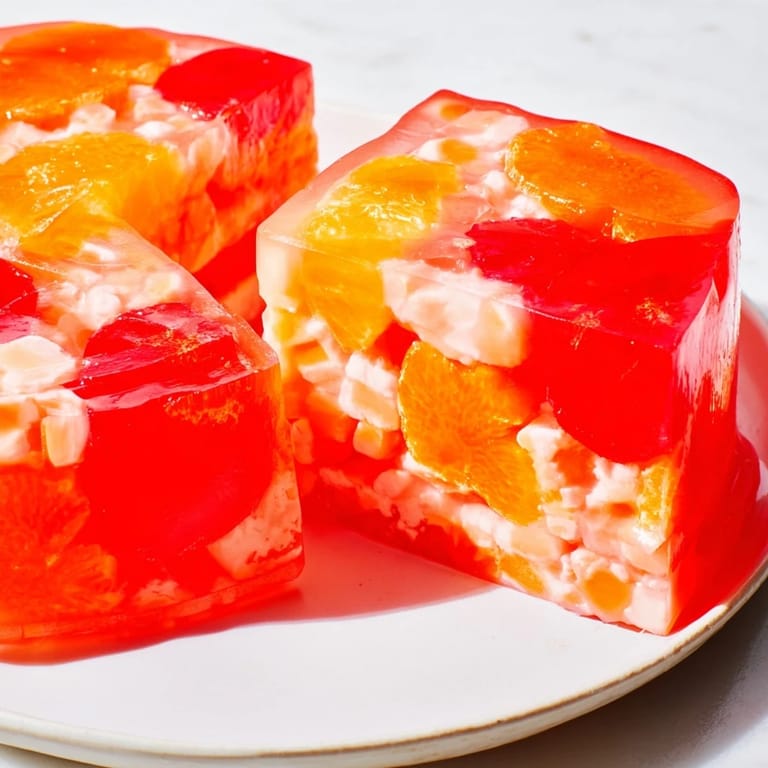
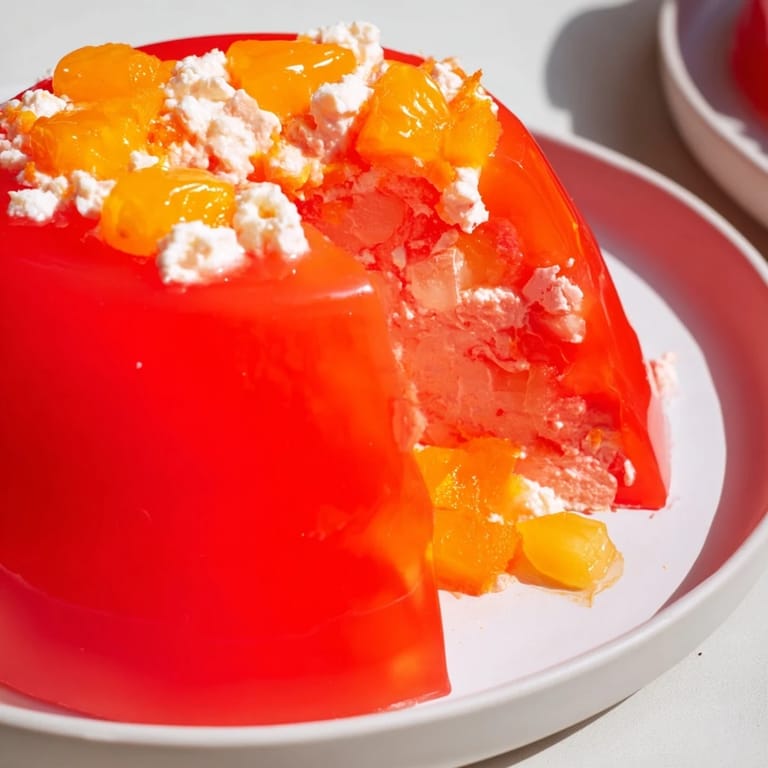
 My grandmother had this exact mold sitting in her kitchen cabinet—the one with the ridged sides that made perfect diamond patterns when the Jell-O turned out just right. I must have watched her make this a hundred times at church potlucks, that moment when she'd dip the pan in warm water and flip it onto the plate with such confidence, like she was performing magic. There's something about the wobble of it, the way the fruit and carrots caught the light, that made it feel fancy even though it was so simple to make. When I finally tried it myself, I realized the real magic wasn't in technique—it was in how it brought people together, how kids would actually eat fruit when it was suspended in jewel-toned gelatin.
I made this for a church gathering last spring, and a woman I'd never met before asked for the recipe halfway through dessert—she said it reminded her of her childhood, of her own grandmother's kitchen. That's when I understood this wasn't just food; it was a bridge between people's memories. She came back the next week with a photo of her own version, tweaked with lime and pears, and suddenly we had this little tradition going. It's wild how a simple molded dessert can do that, how it carries so much more weight than its ingredients suggest.
Ingredients
- Flavored gelatin (strawberry or orange): This is your canvas—pick flavors that make you happy because you're about to eat a lot of it, and bright, cheerful colors matter more than you'd think.
- Boiling water: Crucial for fully dissolving the gelatin; don't skimp on the heat or you'll end up with grainy bits.
- Cold water: This stops the cooking process and starts the setting, so use genuinely cold or even ice-cold water for best results.
- Crushed pineapple: Drain it well—excess juice will weaken the gel and make your finished salad too soft.
- Canned mandarin orange segments: The juice clings to these, so pat them dry with paper towels before stirring them in.
- Grated carrots: Fresh is better than pre-shredded because they have more texture and don't start oxidizing mid-chill.
- Small-curd cottage cheese: Those tiny curds distribute evenly and add creaminess without overwhelming texture—don't use large-curd unless you like that rougher feel.
- Chopped walnuts: Optional but they add a subtle crunch that changes everything; toast them lightly first if you want them to really sing.
Tired of Takeout? 🥡
Get 10 meals you can make faster than delivery arrives. Seriously.
One email. No spam. Unsubscribe anytime.
Instructions
- Dissolve the gelatin:
- Pour the boiling water over both packages of gelatin in your bowl and stir steadily for about two minutes until every granule has disappeared and the mixture is perfectly clear. You'll know it's done when there are no grainy bits settling at the bottom.
- Cool it down:
- Add the cold water and let it sit at room temperature for about 20 minutes—you want it cooled but not yet starting to set. It should feel like bathwater, not hot and not cold.
- Layer in the goodness:
- Gently fold in the pineapple, oranges, carrots, and cottage cheese, stirring slowly so you don't trap too many air bubbles. The mixture should look studded with color at this point.
- Mold it:
- Pour everything into your mold and smooth the top with a spatula so it sets evenly. If you're using a bundt pan, you'll get those beautiful ridges running through every slice.
- The long wait:
- Cover the mold with plastic wrap and refrigerate for at least three hours, preferably overnight. Patience here matters—pulling it out too early means collapsing salad and disappointment.
- The unmold moment:
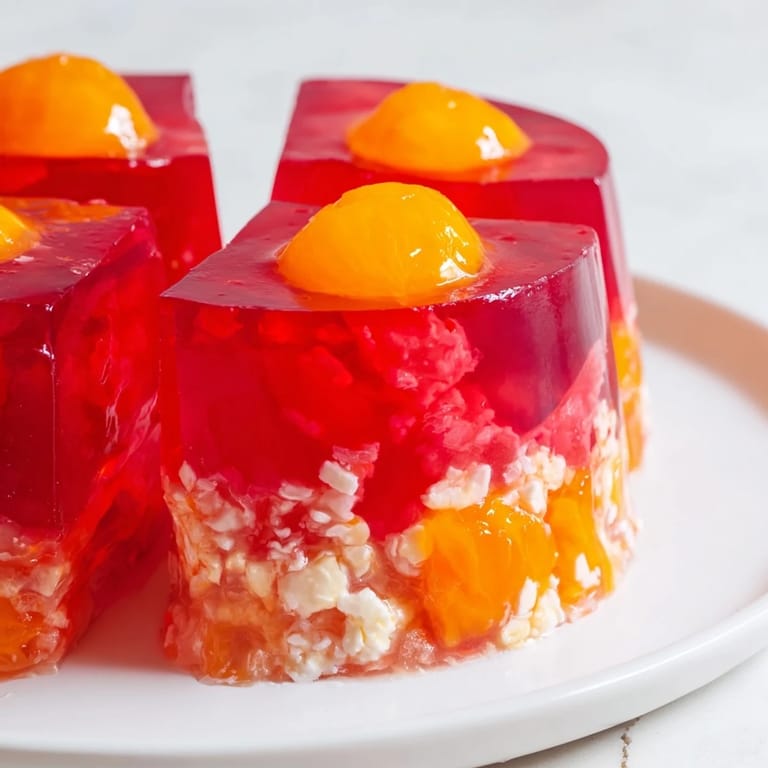
- Dip the mold briefly in warm water (count to five), run a thin knife around the edge, place your serving plate on top, and flip with one confident motion. If it doesn't budge, dip again for just a few more seconds.
 Save to Pinterest
 There's a moment, right after you unmold it and it lands perfectly on the plate with that satisfying little jiggle, when you realize you've made something that feels both retro and joyful. It's not about being trendy or sophisticated—it's about the pure pleasure of feeding people something that makes them smile the moment they see it. That's what this dish does.
Flavor Combinations That Actually Work
Once you've made the classic version, you'll start experimenting with different gelatin flavors and fruit pairings. Lime gelatin with pears and grated apple is almost elegant, while orange gelatin with crushed pineapple and a handful of cherries feels summery and bright. I've even done raspberry gelatin with raspberries and shredded zucchini (trust me on this one), which sounds weird but creates this subtle earthiness that works. The rule I've learned is to pair fruit with gelatin flavors that either match or complement—not clash.
Making It Your Own
The beauty of this recipe is how forgiving it is, how much room there is to make it reflect what you have on hand or what you're craving. Some people add a layer of sour cream in the middle, some use cream cheese instead of cottage cheese, and some skip the fruit entirely and go heavy on the cottage cheese and nuts for something closer to a creamy mousse. I've seen versions with coconut, versions with thinly sliced grapes suspended throughout, and one memorable version with crushed peppermint candy that shouldn't have worked but absolutely did.
Serving and Storage Tips
Slice it with a warm, wet knife for clean cuts that don't drag the gelatin apart, and always serve it chilled straight from the fridge. It keeps for about three days covered, though the texture starts to weep slightly after the second day, so make it fresh if you can. A dollop of whipped cream on the side elevates it instantly, and it pairs beautifully with ham or turkey at lunch or stands on its own as a light dessert.
- Store it covered in the fridge to keep it from absorbing other flavors or drying out.
- If you need to transport it, leave it in the mold until you're ready to serve, then unmold it carefully at your destination.
- A little lemon juice mixed into whipped cream makes the perfect topping that cuts through the sweetness.
 Save to Pinterest
 This recipe lives in that beautiful space where it's easy enough for a weeknight but impressive enough to bring to any gathering. It's comfort and celebration at once.
Frequently Asked Recipe Questions
- → What gelatin flavors work best with this dish?
Strawberry and orange flavors complement the fruit and cottage cheese well, enhancing the dessert's colorful appeal.
- → Can I substitute cottage cheese for a lighter option?
Yes, using low-fat cottage cheese reduces calories while maintaining creaminess in the mold.
- → How long should the gelatin mold chill before serving?
It requires at least 3 hours in the refrigerator to fully set and achieve the proper texture.
- → Are nuts necessary in this dish?
Chopped walnuts are optional and can be replaced with pecans or omitted for a nut-free version.
- → What is the best way to unmold the gelatin?
Dipping the mold briefly in warm water loosens it, allowing easy inversion onto a serving platter without damage.