 Save to Pinterest
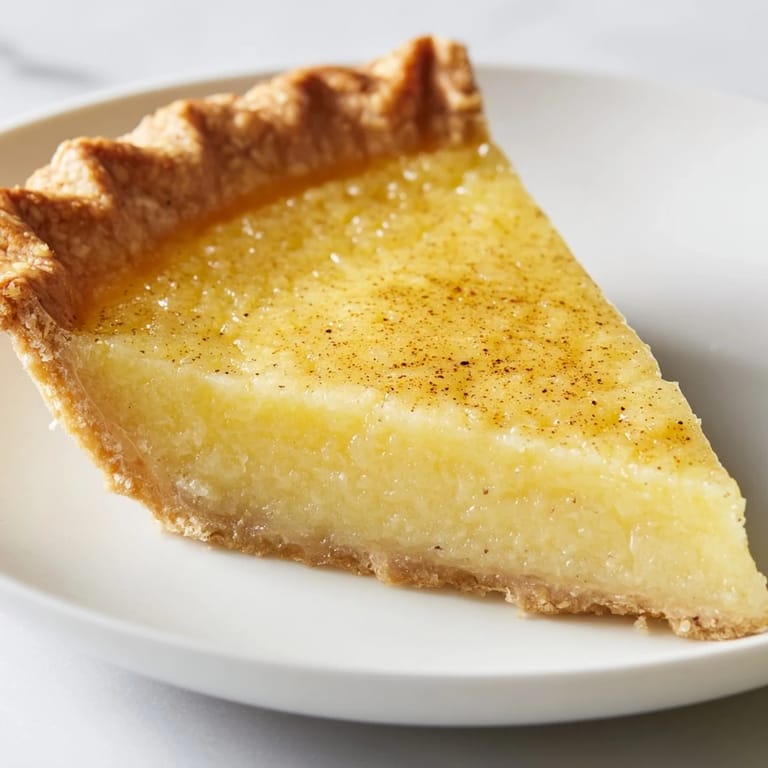
 My grandmother kept a buttermilk pie in her kitchen almost every weekend, and I didn't understand it until I tasted the filling—that unexpected tang cutting through the sweetness like a secret she'd been keeping. The first time I made it myself, I was skeptical that something so simple could be so good, but watching the custard puff up in the oven and settle into that creamy, cloud-like texture convinced me otherwise. Now I make it whenever I need something that feels both effortless and impressive, something that tastes like it took hours when it barely took any time at all.
I brought this pie to a potluck once thinking nobody would touch it—the filling seemed too strange, too simple. Three people asked for the recipe before I'd even cut the second slice, and I realized that sometimes the best things don't need fancy ingredients or complicated techniques, just butter, eggs, and the willingness to trust the process.
Ingredients
- Unbaked 9-inch pie crust: Use homemade if you're feeling ambitious, but store-bought saves time without sacrificing flavor—just thaw it if frozen.
- Granulated sugar: This is your sweetness foundation, whisked together with flour to create a silky base.
- All-purpose flour: Two tablespoons sounds like nothing, but it helps the filling set without making it dense.
- Unsalted butter, melted and cooled: Let it cool slightly or it'll scramble your eggs—I learned that the hard way.
- Large eggs: They're the binding magic here; add them one at a time so they incorporate smoothly.
- Buttermilk: This is the star, the thing that makes people pause and ask what's in here—use real buttermilk, not milk with lemon juice.
- Lemon juice: A tablespoon brightens everything and keeps the filling from tasting one-note.
- Vanilla extract: One teaspoon rounds out all those flavors like a soft whisper.
- Ground nutmeg: Just a pinch, but it's the ingredient that makes people guess what they're tasting.
- Salt: A quarter teaspoon balances the sweetness and makes every other ingredient taste more like itself.
Tired of Takeout? 🥡
Get 10 meals you can make faster than delivery arrives. Seriously.
One email. No spam. Unsubscribe anytime.
Instructions
- Heat your oven and ready the crust:
- Set the oven to 350°F while you get your pie crust settled into the dish, crimping the edges however you like—it'll puff slightly as it bakes. Don't skip this step; a cold crust helps prevent a soggy bottom.
- Build your dry base:
- Whisk the sugar and flour together in a large bowl, breaking up any lumps so your filling comes out silky instead of grainy. This combination is doing the heavy lifting of thickening your filling.
- Bring in the butter and eggs:
- Stir the cooled melted butter into the sugar mixture until it's combined, then add your eggs one at a time, whisking after each one so you get a smooth, creamy base instead of scrambled bits floating around.
- Add the wet ingredients:
- Pour in the buttermilk, lemon juice, vanilla, nutmeg, and salt, stirring until everything is incorporated and smooth. The batter will look thin, but trust that it's supposed to—that's what creates that custard-like texture.
- Pour and bake:
- Transfer the filling to your waiting crust and slide it into the oven for 40 to 50 minutes, watching until the top turns a light golden brown and the center just barely jiggles when you move the rack. It'll continue to set as it cools, so don't overbake it.
- Cool with patience:
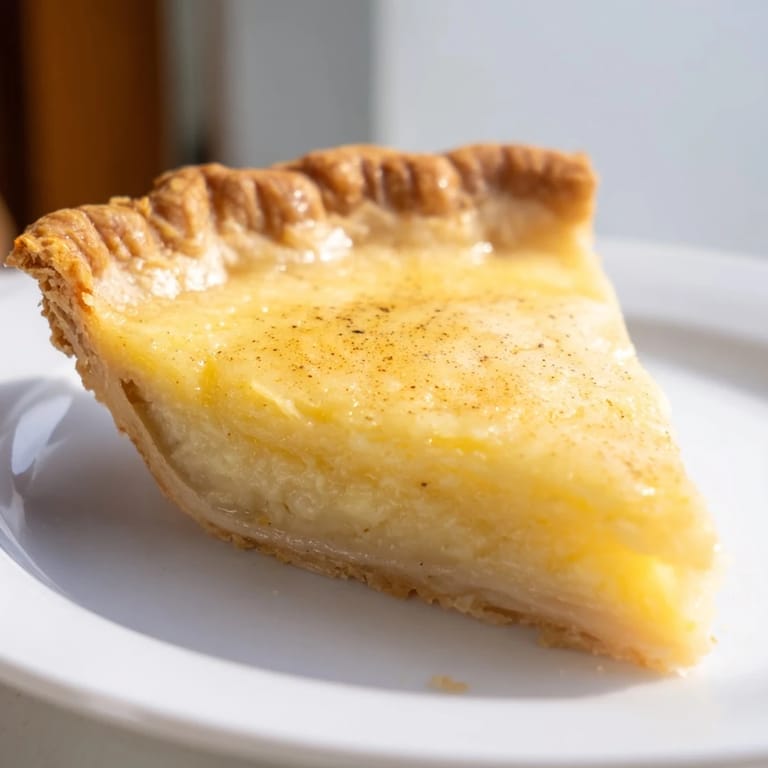
- Let it rest completely on a wire rack before slicing—this takes time, but cutting into it warm means a messy pie and a ruined slice. Room temperature is perfect, or chill it if you prefer it cold.
 Save to Pinterest
 My neighbor once told me she'd made this pie for her husband every month for thirty years, and he still lit up when she pulled it out of the oven. That stuck with me—not everything needs to be trendy or complicated to matter.
The Beauty of Buttermilk
There's something almost magical about buttermilk in desserts; it adds a subtle tang that makes people pause and ask what they're tasting. It keeps the pie from being cloyingly sweet, cutting through the richness with just enough sharpness to make you want another bite. Don't skip it or substitute regular milk—the buttermilk is doing the actual flavor work here.
Customizing Your Pie
This recipe is forgiving, which is part of why it's so perfect. If you like things tangier, add up to two extra tablespoons of lemon juice—I've done this and it's incredible. For a more pronounced spice note, dust extra nutmeg over the top before it goes into the oven, or even try a pinch of cinnamon if you're feeling it.
Serving and Storage
This pie is best served at room temperature or chilled, depending on your mood and the season—cold on a hot day, room temperature in fall or winter. A dollop of whipped cream or fresh berries alongside each slice turns it into something special, but honestly, it doesn't need anything.
- Leftover pie keeps in the refrigerator for up to three days, though it rarely lasts that long.
- Slice it the day after baking if you prefer cleaner cuts and a firmer texture.
- It travels well to potlucks, picnics, or any situation where you need to show up with something that tastes like love.
 Save to Pinterest
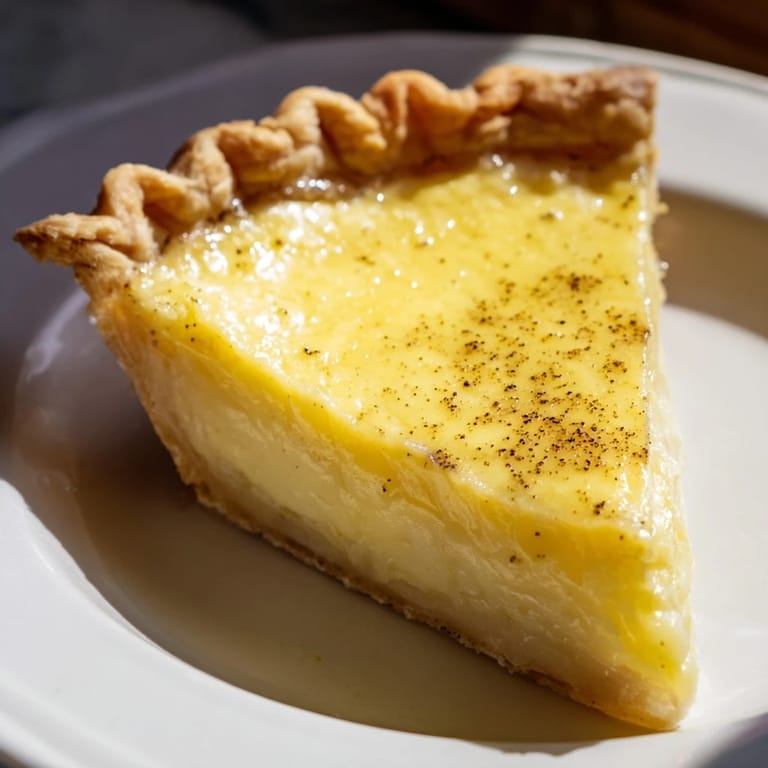
 Buttermilk pie isn't trying to be anything other than what it is: simple, honest, and deeply satisfying. Make it once and it becomes a permanent part of your kitchen.
Frequently Asked Recipe Questions
- → What gives this pie its tangy flavor?
The tanginess comes from buttermilk and a touch of lemon juice incorporated into the filling mixture.
- → Can I use a homemade crust for this dish?
Yes, both homemade and store-bought pie crusts work well; just ensure it fits a 9-inch pie dish.
- → How do I know when the custard is fully baked?
The center should be set but slightly jiggly when shaken gently, and the top lightly golden.
- → Is it better served warm or cold?
It can be served at room temperature or chilled, depending on preference, both enhancing its creamy texture.
- → Can I add extra flavorings?
Yes, adding up to two tablespoons of lemon juice or sprinkling nutmeg on top before baking boosts the aroma and flavor.